Skills-Based Therapy
Evidence-Based Therapy at Idaho Youth Ranch
The proven clinical methods we use, how treatment is tailored to your child, and how we measure progress.
Evidence-based therapy means treatments that have been tested in rigorous clinical research and demonstrated to produce measurable improvement for the conditions they target. It means your child’s treatment plan is built on what the research shows works — not on a therapist’s personal preference or a one-size-fits-all approach. At Idaho Youth Ranch, every clinician is trained in evidence-based modalities and every treatment plan is tailored to the specific needs identified in your child’s comprehensive evaluation. This page explains what evidence-based therapy is, describes the five core modalities we use, and shows how we ensure that treatment is working.

What “evidence-based” actually means
The term “evidence-based” is used broadly in mental health, and not always accurately. At Idaho Youth Ranch, it has a specific meaning: we use therapies that have been tested through controlled clinical trials, published in peer-reviewed research, and demonstrated to produce meaningful improvement for the conditions they target. These are not experimental approaches. They are methods with decades of supporting evidence and established protocols for how they are delivered.


This matters for families because it provides a measure of accountability. When your child receives CBT for anxiety, we are using a protocol that has been tested with thousands of young people and shown to reduce anxiety symptoms in the majority of cases. When your child receives TF-CBT for trauma, we are using the treatment that the National Child Traumatic Stress Network identifies as the gold standard for pediatric trauma. You are not hoping something might work. You are starting with what the research has already shown does work.
It also matters for clinicians and referring professionals. Evidence-based practice at IYR means structured treatment protocols, measurable outcomes, fidelity to the model, and clinical supervision that ensures quality. Our clinicians are not improvising. They are delivering specific treatments with demonstrated effectiveness, monitored through standardized tools, and supported by weekly reflective supervision.
The therapies we provide
Idaho Youth Ranch clinicians are trained in five evidence-based modalities. Each addresses different conditions and functions differently in treatment. Your child’s treatment plan may include one or a combination, depending on what the evaluation identifies.
Cognitive Behavioral Therapy (CBT)
CBT is the most widely researched psychotherapy for children and adolescents. It works by helping young people identify the thoughts and beliefs that drive their emotional distress and behavioral responses, evaluate whether those thoughts are accurate, and develop alternative ways of thinking and responding. CBT is structured and skill-based: your child learns specific tools they practice between sessions and apply to real-life situations. For parents, CBT provides a framework for understanding why your child reacts the way they do and how to support the cognitive shifts that reduce distress.
Dialectical Behavior Therapy (DBT)
DBT was originally developed for individuals with chronic suicidality and has since been adapted for adolescents (DBT-A). It teaches four core skill sets: mindfulness, distress tolerance, emotion regulation, and interpersonal effectiveness. DBT is the strongest evidence-based treatment for young people with recurrent suicidal thinking, self-harm, and severe emotional dysregulation. In multiple studies, 70–80% ofsuicidal youth receiving DBT achieved complete remission of suicidal thoughts. The treatment includes individual therapy, multi-family skills training groups,between-session phone coaching, and a therapist consultation team. Parent and family involvement is built into the model.
Trauma-Focused Cognitive Behavioral Therapy (TF-CBT)
TF-CBT is the most widely researched and recommended treatment for children and adolescents who have experienced trauma. It works through a structured set of components — psychoeducation, relaxation, affective expression, cognitive processing, a gradual trauma narrative, and conjoint parent-child sessions — that help young people process traumatic experiences and develop coping skills. TF-CBT does not force a child to relive trauma in graphic detail. Processing happens gradually, at the child’s pace, within a safe therapeutic relationship. Parent involvement is essential and is one of the strongest predictors of positive outcomes.
Eye Movement Desensitization and Reprocessing (EMDR)
EMDR helps the brain reprocess traumatic memories so they no longer trigger the same intensity of distress. During sessions, the child focuses on a traumatic memory while simultaneously engaging in bilateral stimulation — typically guided eye movements. This dual attention appears to help the brain move the memory from the “always present” alarm state into the “past event” category. EMDR requires less verbal processing than TF-CBT, which makes it particularly effective for young people who struggle to talk about what happened. It can be used as a standalone treatment or in combination with other modalities.
Equine-Assisted Psychotherapy
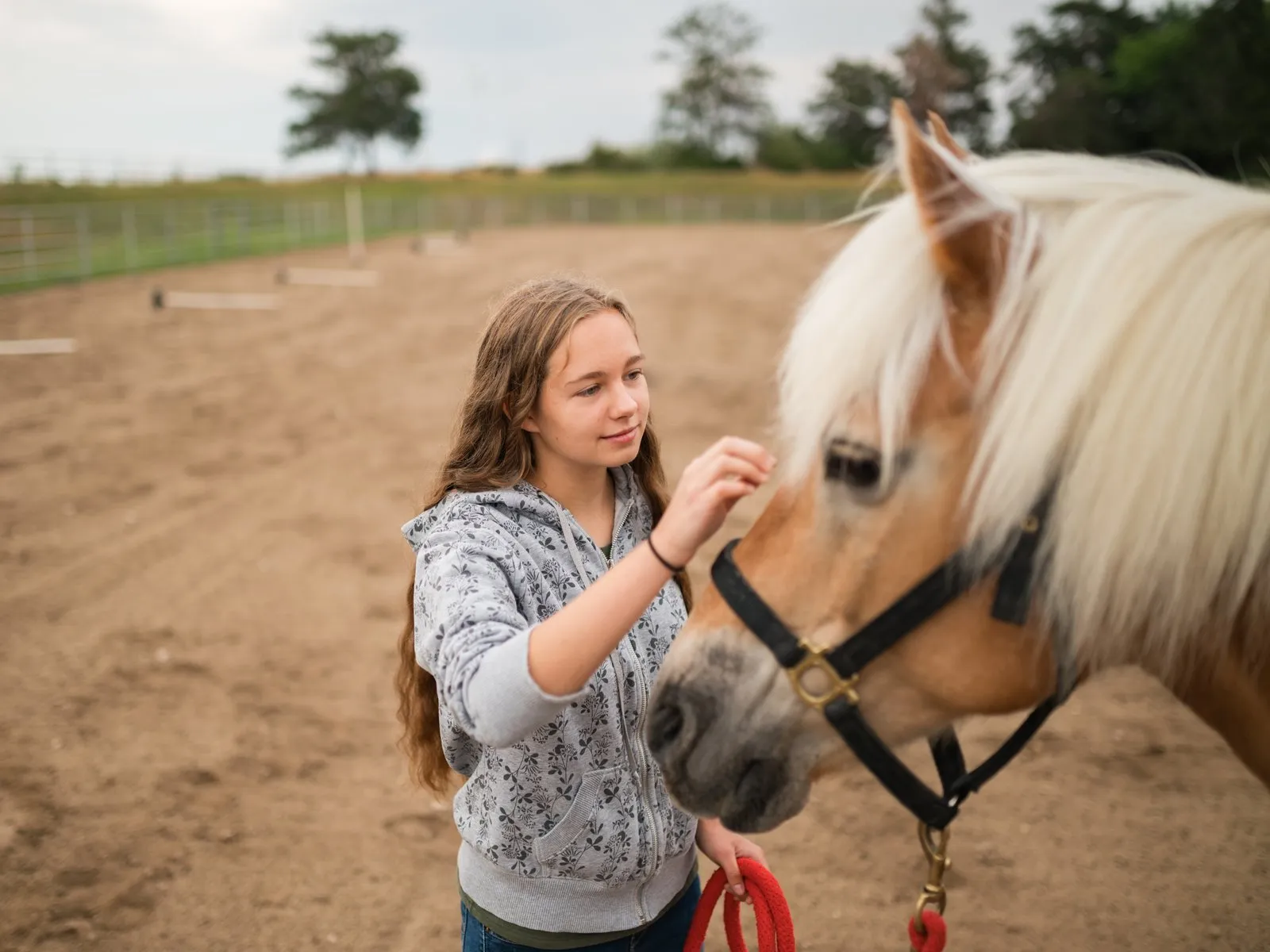
Equine-assisted psychotherapy uses structured interactions with horses, guided by a licensed therapist, to promote emotional growth, regulation, and relational skill-building. Activities are ground-based— no riding is involved. Horses are highly attuned to human emotional states and provide immediate, non-judgmental feedback on a child’s approach and affect. For young people who resist traditional talk therapy, who carry traumain their body, or who struggle with trust and verbal expression, the equine setting removes barriers that office-based therapy cannot. IYR’s equine program is EAGALA-certified and fully integrated into our trauma-informed model.
How we match treatment to your child

Evidence-based therapy is not one-size-fits-all. The modality that works for anxiety-driven school refusal is different from the one that works for trauma-driven aggression, which is different from the one that works for chronic suicidality. Matching the right treatment to the right condition is what produces results.
At Idaho Youth Ranch, treatment begins with a comprehensive evaluation that assesses your child across multiple domains: presenting behavior, mood, anxiety, attention, trauma history, family dynamics, social functioning, and school performance. This evaluation identifies not just what your child is doing, but what is driving it — because the same surface behavior (defiance, withdrawal, anger) can be produced by entirely different underlying conditions, each requiring a different treatment approach.
Based on the evaluation, your child’s clinician develops a treatment plan that specifies which modalities will be used, what the treatment targets are, and how progress will be measured. The plan is reviewed regularly and adjusted as your child responds to treatment. If the initial approach is not producing the expected progress, we do not simply continue it longer. We reassess and adapt.
How we know treatment is working
Clinical improvement should not be a matter of opinion. At Idaho Youth Ranch, we use standardized outcome measures — the same validated assessment tools used in the clinical trials that established these therapies — to track your child’s progress at regular intervals throughout treatment. These tools measure changes in symptom severity, emotional regulation, behavioral functioning, and quality of life.
This means you will not be left wondering whether therapy is helping. Your child’s clinician can show you where your child started, where they are now, and whether the trajectory is on track. If progress is stalling, the data tells us early — before months of ineffective treatment pass — and informs the decision about what to adjust.
Progress measurement also supports clinical supervision. Every week, our clinicians review cases with their supervisors using outcome data to ensure treatment quality and fidelity to evidence-based protocols. This is an additional layer of accountability that protects your child’s care.
Frequently asked questions
Common questions
parents may have
Answers to some of the questions families often ask when trying to understand these challenges.
What does “evidence-based” mean in practice?

It means the therapies we use have been tested through controlled clinical trials and demonstrated to produce measurable improvement for specific conditions. It also means our clinicians follow established treatment protocols, track progress with standardized tools, and receive weekly supervision to ensure quality. Evidence-based practice is a commitment to accountability, not just a label.
How do you decide which therapy my child needs?
It depends on your child’s specific needs and the complexity of what is driving the presenting concern. Many families see meaningful progress within three to six months of consistent participation. Some conditions respond faster; others, particularly complex trauma or chronic suicidality, may require longer treatment. Your child’s clinician will provide a more specific timeline after the initial evaluation.
How long does therapy usually take?
It depends on your child’s specific needs and the complexity of what is driving the presenting concern. Many families see meaningful progress within three to six months of consistent participation. Some conditions respond faster; others, particularly complex trauma or chronic suicidality, may require longer treatment. Your child’s clinician will provide a more specific timeline after the initial evaluation.
Is equine-assisted psychotherapy evidence-based?
Yes. Multiple peer-reviewed studies demonstrate that equine-assisted psychotherapy improves emotional regulation, trust, and relational skills in young people. IYR’s equine program is EAGALA-certified and is integrated into our broader treatment model, not offered as a standalone activity.
Can parents participate in therapy?
Yes, and in most cases, parent involvement is a core component of treatment. Research consistently shows that family engagement is one of the strongest predictors of positive outcomes in youth therapy. Depending on the modality, parent participation may include parallel parent sessions, conjoint parent-child sessions, multi-family skills groups, or parent coaching.
What if my child has tried therapy before and it did not help?
Many families come to Idaho Youth Ranch after previous therapy experiences that did not produce lasting change. This often happens when the therapy was not matched to the right condition, the underlying cause was not identified, or the treatment lacked structure. Our approach — comprehensive evaluation, evidence-based modalities, progress measurement, and clinical supervision — is designed to address these gaps.