Understanding Teen Bullying: A Complete Guide for Parents
What bullying really looks like today, how it affects your teen, and what you can do about it
Bullying among teenagers has become an increasingly complex problem. With the rise of social media and mobile technology, bullying no longer stops when the school bell rings. Teens now face bullying around the clock — through group chats, social media posts, anonymous accounts, and viral content that can follow them from school into their bedroom. As a parent, it can be difficult to know what’s happening in your teen’s social world. Many teens hide bullying out of embarrassment, fear of retaliation, or worry that adult intervention will make things worse. This guide is designed to help you understand what bullying looks like today, recognize the signs that your teen may be affected, and take concrete steps to support them.
Bullying is repeated, intentional aggression involving a power imbalance, where the person bullying has more social or physical power than the target. That makes it different from a one-time conflict, even an ugly one. Both deserve attention, but bullying needs more structured intervention because the targeted teen usually cannot resolve it on their own.
Type 1: Physical. Physical bullying involves harming the victim’s body or possessions. Hitting, kicking, shoving, tripping, and stealing or destroying belongings are all forms of physical bullying. While often the most visible form, it is not the most common — and it often co-occurs with verbal bullying.
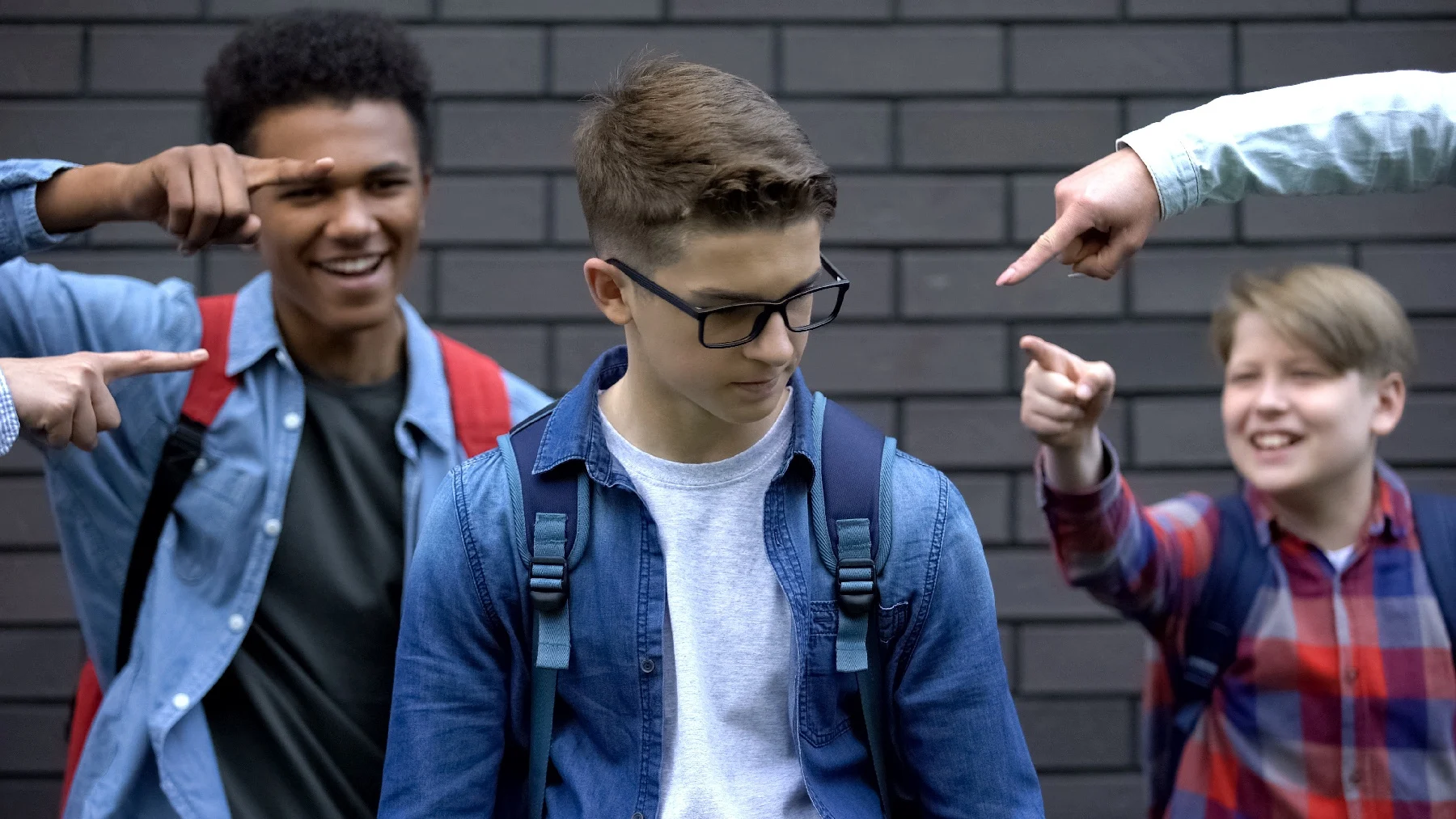
Type 2: Verbal. Verbal bullying uses words to harm — name-calling, taunting, threatening, making offensive comments, or spreading rumors. It is the most common form of bullying experienced by both boys and girls. Because it leaves no visible marks, it is often minimized by adults, but its impact on self-esteem and mental health can be profound.
Type 3: Social / Relational. Social bullying aims to damage a teen’s relationships or social standing through exclusion, manipulation, and rejection. Social bullies spread rumors, intentionally exclude others from activities, or convince peers to ignore someone. This form is particularly common among girls and can be very difficult for parents to detect because it happens within friend group dynamics.
Type 4: Cyberbullying. Cyberbullying uses electronic means — text messages, social media, group chats, gaming platforms, and anonymous apps — to harass, humiliate, or threaten. It can include posting embarrassing photos, creating fake profiles, spreading rumors online, doxing (sharing personal information), and sending threatening messages. Cyberbullying is especially damaging because it follows teens home, spreads rapidly, can involve anonymous perpetrators, and creates a permanent digital record.
read
7 min
Reviewed
March 2026
Audience
Parents
Type
Guide
How Common Is Bullying?
How Bullying Affects Teen Mental Health
Recognizing That Your Teen May Be Bullied
What parents should know
What this article covers:
- Coping skills replace self-harm most effectively when they serve the same function — a strategy for emotional overwhelm may not work for numbness, and vice versa.
- Takeaway 2 Short Text Skills must be practiced before the crisis, not introduced during one. A coping strategy used for the first time mid-urge rarely works.
- Takeaway 3 Short Text No single strategy works for every teen. Individualization matters — your teen should build a personal toolkit of 5–10 options they have tested and trust.
- Takeaway 4 Short Text Coping skills are not a substitute for therapy. They manage the moment; therapy addresses the cause.
- Takeaway 5 Short Text Using a coping skill instead of self-harming — even imperfectly — is meaningful progress worth acknowledging.
Why Matching the Skill to the Function Matters
Not all coping skills work for all reasons teens self-harm. A teen who cuts to release overwhelming emotion needs strategies that discharge intensity. A teen who self-harms to feel something through numbness needs strategies that generate sensation. Handing a generic list of “healthy coping skills” to a teen without matching the skill to the need is one of the most common reasons replacement strategies fail.
The categories below are organized by the function the self-harm is serving. If you are unsure which function applies to your teen, see our resource page: Why Teens Self-Harm.
When the urge is about releasing overwhelming emotion
These strategies work by discharging the intense emotional energy that self-harm would otherwise release:
Intense physical exercise -
sprinting, jumping jacks, pushing against a wall with full force, punching a pillow. The goal is to move the energy out of the body.
Holding ice cubes tightly in a closed fist or pressing them against the inner wrist.
The intense cold produces a strong physical sensation that can break the emotional spiral without causing injury.
Submerging hands or face in very cold water, or taking a cold shower.
The “dive reflex” activates the parasympathetic nervous system and rapidly reduces emotional arousal.
Screaming into a pillow or tearing up paper, old magazines, or cardboard -
physical release without physical harm.
Writing out the emotion in raw, unfiltered language -
not journaling for insight, but venting on paper. The paper can be destroyed afterward.
A coping skill that serves the same function as the self-harm is far more likely to work than a generic suggestion to “try deep breathing.”
When the urge is about feeling something through numbness
These strategies generate physical sensation or emotional activation that breaks through disconnection:
Snapping a rubber band against the wrist — a brief, sharp sensation that does not cause lasting harm.
Holding something frozen, biting into a lemon or chili pepper, smelling something pungent like peppermint oil or ammonia. Strong sensory input can interrupt dissociation.
Vigorous physical movement — dancing, running, jumping. The body’s activation produces sensation and emotion.
Drawing on skin with a red marker where they would normally cut. The visual mimics the appearance without the injury and can satisfy the urge for some teens.
Touching textured objects — rough fabric, bark, sandpaper — to ground through tactile sensation.
Touching textured objects — rough fabric, bark, sandpaper — to ground through tactile sensation.
When the urge is about self-punishment
These strategies interrupt the self-blame cycle and redirect toward self-compassion. This is often the hardest function to replace because the teen believes they deserve the pain:
Writing a letter to themselves from the perspective of someone who loves them - a friend, a grandparent, a therapist. The exercise externalizes compassion.
Reading or listening to something affirming. Pre-selected quotes, voice memos from loved ones, or a list of things they are proud of, assembled during a calm moment
Challenging the thought directly: “What would I say to a friend who felt this way about themselves?” The answer is almost never “You deserve to be hurt.”
Physical self-care as a counter-action: taking a warm bath, applying lotion to the skin, wrapping themselves in a blanket. Treating the body with gentleness contradicts the punishment impulse.

When the urge is about regaining control
These strategies provide a sense of agency and mastery without self-injury:
- Organizing something — a drawer, a playlist, a workspace. The act of imposing order on a small area can reduce the sensation of chaos.
- Making a deliberate choice about something: what to eat, what to wear, where to go for a walk. Exercising agency in safe domains.
- Creating something — art, music, writing, cooking. Creation is an act of control that produces something rather than destroying something.
- Setting and completing a small, concrete goal: cleaning a room, finishing a task, solving a puzzle. The sense of completion counteracts helplessness.
You do not need a diagnosis, a referral, or a clear picture of what’s going on. Many families start therapy with exactly the kind of uncertainty you may be feeling right now. A professional can help determine whether what you are seeing is a rough patch or a developing mental health concern — and either way, your teen benefits from having a safe, neutral space to process what they are going through.
When the urge is about communicating distress
These strategies help teens express pain directly rather than through their body:
Texting or calling a trusted person from the safety plan:
“I’m having a really hard time right now.” The act of reaching out directly replaces the indirect communication of self-harm.
Writing what they need and showing it to someone:
“I need help. I don’t know how to say it out loud.”
Using an emotion rating system with a parent -
a simple 1–10 scale, a color system, or emoji cards. This gives language to distress without requiring articulation.
Journaling the unsaid:
writing what they wish they could tell someone, even if they never share it. The act of forming the words is itself a form of expression.
How to Build Your Teen’s Personal Toolkit
The most effective approach is to sit with your teen during a calm moment — not during a crisis — and explore which strategies feel realistic to them. No one else can choose the right coping skills for your teen. They need to select strategies that match their specific experience, test them in low-stakes situations, and build confidence that the strategy works before they need it under pressure.
Aim for a list of 5 to 10 options written down and accessible — on their phone, on an index card in their wallet, taped inside a drawer. The list should include at least one option for each function they experience. When the urge hits, decision-making capacity drops. A pre-made list removes the need to think of alternatives in the worst possible moment.
An Important Note
Coping skills manage the moment. They do not treat the cause. A teen who is successfully using ice cubes instead of cutting is making real progress — but they still need therapy to address the emotional pain that is generating the urge in the first place. These strategies work best as one element of a broader treatment plan, not as a standalone solution.
Research Citations
- DBT-A distress tolerance skills (Linehan, Miller, Rathus);
- NICE guidance on self-harm management;
- Child Mind Institute; American Academy of Child and Adolescent Psychiatry
Tell Us What’s Going On
What brings you here today?
Select a topic to begin:
Frequently asked questions
Common questions
parents may have
Answers to some of the questions families often ask when trying to understand these challenges.
Why don’t coping skills always work?
The most common reasons: the skill does not match the function (a calming technique offered to a teen seeking sensation), the skill was introduced during a crisis rather than practiced beforehand, or the emotional intensity exceeded the skill’s capacity. When skills fail, it usually means the match or the timing needs adjustment — not that the teen is failing.
Why don’t coping skills always work?
The most common reasons: the skill does not match the function (a calming technique offered to a teen seeking sensation), the skill was introduced during a crisis rather than practiced beforehand, or the emotional intensity exceeded the skill’s capacity. When skills fail, it usually means the match or the timing needs adjustment — not that the teen is failing.
Why don’t coping skills always work?
The most common reasons: the skill does not match the function (a calming technique offered to a teen seeking sensation), the skill was introduced during a crisis rather than practiced beforehand, or the emotional intensity exceeded the skill’s capacity. When skills fail, it usually means the match or the timing needs adjustment — not that the teen is failing.
Frequently asked questions
Common questions
parents may have
Answers to some of the questions families often ask when trying to understand these challenges.

Often more so. Cyberbullying follows teens home, can involve anonymous perpetrators, spreads to wide audiences, and creates permanent digital records. Research links it to higher rates of depression, anxiety, and suicidal ideation. See our Cyberbullying resource page for specific guidance.
Bullying behavior is almost always driven by unmet emotional needs. Take the report seriously, set clear boundaries, focus on repair and accountability, and look at what is driving the behavior. Professional counseling can help. See our resource page on When Your Child Is the Bully for detailed guidance.
Involving the school is often necessary, but how you do it matters. Talk with your teen first. Bring documentation. Ask about specific steps and follow-up. If the school's response is inadequate, escalate to the district. See our resource page on Bullying at School for a detailed action plan.
This is common. Rather than pressing for details, create regular low-pressure opportunities for conversation. Share that you have noticed changes. Avoid "Are you being bullied?" which often prompts denial. Try "How are things going with your friends?" or "Anything stressful at school?"
Yes. Research shows that chronic bullying can alter brain chemistry, disrupt stress hormone regulation, and create lasting vulnerability to anxiety and depression. Children bullied between ages 8 and 10 showed higher rates of depression, anxiety, and suicidal ideation by age 25. However, early intervention significantly reduces long-term impact.
Normal peer conflict involves disagreements between equals where both parties have some power and the conflict is typically isolated. Bullying involves a power imbalance, is repeated over time, and is intentionally harmful. A single argument is not bullying. Sustained targeting of a teen who cannot effectively defend themselves is.
Antidepressants, particularly SSRIs, are well studied in adolescents and can be an important part of treatment for moderate to severe depression. Fluoxetine is the most established first-line option for teens. There is an FDA warning about a small increased risk of suicidal thoughts in young people, especially in the first weeks, which is why close monitoring during that period matters. Importantly, treating depression lowers suicide risk overall, and medication does not change who your teen is; it lowers the baseline enough for therapy to take hold. Any decision should be made with the prescribing clinician and your family.
Why Teens Bully
<p>Children and teens rarely bully out of pure malice. More often, bullying behavior serves an unmet psychological or social need. Understanding the motivations does not excuse the behavior, but it can help parents — whether your teen is being bullied or doing the bullying — understand the dynamics at play.</p> <p>Common underlying motivations include:</p> <ul> <li>A desire for social status or dominance within a peer group</li> <li>An attempt to regain a sense of power or control after being bullied themselves</li> <li>Poor emotional regulation or social skills</li> <li>Family environments where aggression, criticism, or manipulation have been modeled</li> <li>Low self-esteem that the teen tries to compensate for by putting others down</li> <li>Lack of consequences from adults, which allows the behavior to continue unchecked</li> <li>Jealousy or resentment toward peers who have something the bully wants</li> </ul> <p>Group dynamics also play a significant role. When peers laugh, encourage, or simply fail to intervene, bullying is reinforced. Bystander behavior is one of the most powerful factors in whether bullying continues or stops.</p>
What Parents Can Do
Bullying and Suicide Risk
Treatment and Therapy Options
Getting Into Care
What you can do at home
Simple ways parents can support
their child
How to support your teen in building and using coping skills:
01
Build the toolkit together during a calm moment
Do not wait for a crisis. Sit with your teen when things are relatively stable and explore which categories apply to them and which strategies feel realistic. Let them lead — they know their experience better than you do. Write the list down and make it accessible.
02
Stock the house with what they need
If ice cubes are on the list, keep ice available. If art supplies help, make sure they are accessible. If physical exercise works, keep a space clear. Removing barriers between the urge and the coping skill makes it more likely the skill will be used.
03
Acknowledge every attempt to use a skill
Even if the skill did not fully work, even if your teen still self-harmed afterward, the fact that they tried an alternative first is meaningful progress. Name it: “I noticed you went for a run before things got bad. That matters.” Recognition reinforces the new pattern.
04
Do not treat coping skills as a substitute for therapy
Coping skills manage the moment. Therapy addresses the cause. Your teen needs both. If you find yourself relying on the toolkit instead of pursuing professional support, the toolkit is doing too much. It is a bridge, not a destination.
How Idaho Youth Ranch Can Help
When bullying has crossed into a mental health concern, your teen needs a therapist who understands how peer trauma affects developing minds. Idaho Youth Ranch’s clinicians specialize in working with adolescents ages 9–24 and use evidence-based approaches including CBT, TF-CBT, and DBT to help teens process bullying-related anxiety, depression, and trauma. You don’t need a referral or a diagnosis to reach out.
We accept most Idaho Medicaid plans and many private insurance providers.