What to Watch For
Behavioral Signs
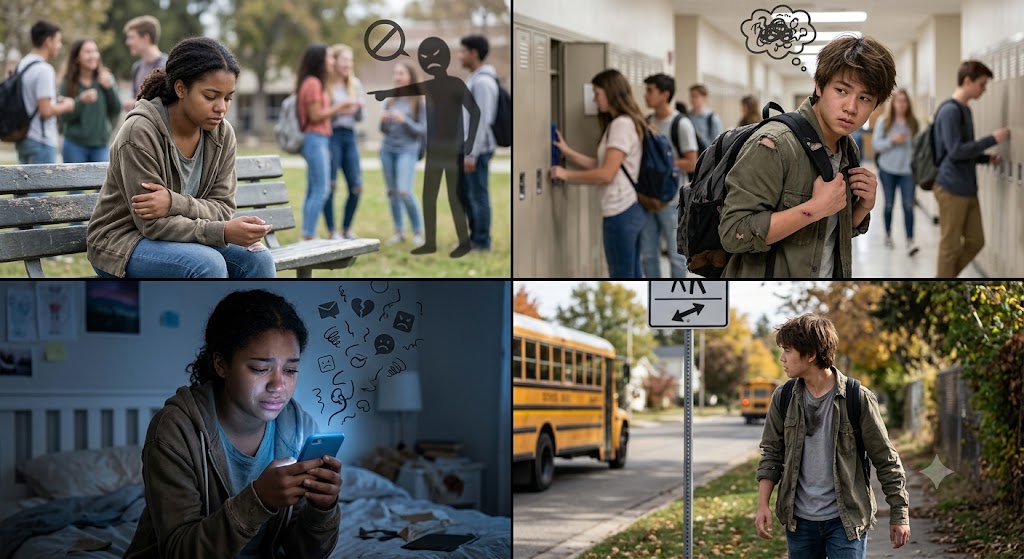
The behavioral, emotional, and physical signs that your teen may be bullied
Behavioral Signs
Reluctance or refusal to go to school. A teen who suddenly dreads school, makes excuses to stay home, develops mysterious illnesses on school mornings, or asks to change their schedule may be trying to avoid a situation that feels unsafe. School avoidance is one of the earliest and most common signals.
Sudden loss of friends or social withdrawal. Pulling away from a friend group, stopping activities, or seeming to have no one to sit with. Relational bullying and social exclusion may not involve physical aggression, so teens may not name it as bullying.
Coming home hungry or asking for extra money. Teens bullied at lunch may skip eating to avoid the cafeteria. Others may have food or money taken.
Increased aggression at home. A teen powerless at school may redirect frustration at siblings or parents. Unexplained aggression without an obvious cause may indicate something happening during the school day.
Changes in routine or requests. Wanting a different bus, asking to be driven, avoiding certain hallways or bathrooms, changing departure times — logistical shifts that signal avoidance of specific people or places.
Emotional Signs
Declining self-esteem or negative self-talk. Self-deprecating comments, criticizing their own appearance, or expressing that they are "stupid," "worthless," or "unlikable." Persistent bullying erodes self-perception gradually.
Persistent mood changes. Ongoing sadness, tearfulness, irritability, or anxiety that does not resolve. Bullied teens often seem emotionally reactive about things unrelated to school because chronic stress has depleted their coping capacity.
Expressions of helplessness or hopelessness. Statements like "Nothing will change" or "What's the point" signal the emotional burden has become overwhelming. These should always be taken seriously.
Physical Signs
Unexplained injuries or damaged belongings. Bruises, torn clothing, broken devices, or missing items that your teen cannot or will not explain.
Frequent physical complaints. Headaches, stomachaches, and fatigue on school mornings that resolve on weekends. These are real stress responses — not faking.
Sleep disruption. Difficulty falling asleep, nightmares, or sleeping much more than usual. Sleep is one of the first systems affected by chronic stress.
Digital Signs
Emotional reactions to device use. Becoming upset, anxious, or angry after looking at their phone. Quickly closing apps or hiding their screen when a parent walks by.
Sudden changes in device behavior. Avoiding devices entirely, deleting social media accounts, creating new accounts under different names, or spending dramatically more or less time online.
The teen who seems fine on the surface may be working very hard to hide what is happening.
Sources: CDC NCHS Data Brief No. 514 (2024); StopBullying.gov; UNICEF — How Do You Know If Your Child Is Being Bullied (2024); PACER Center — Reasons Teens Don't Tell.