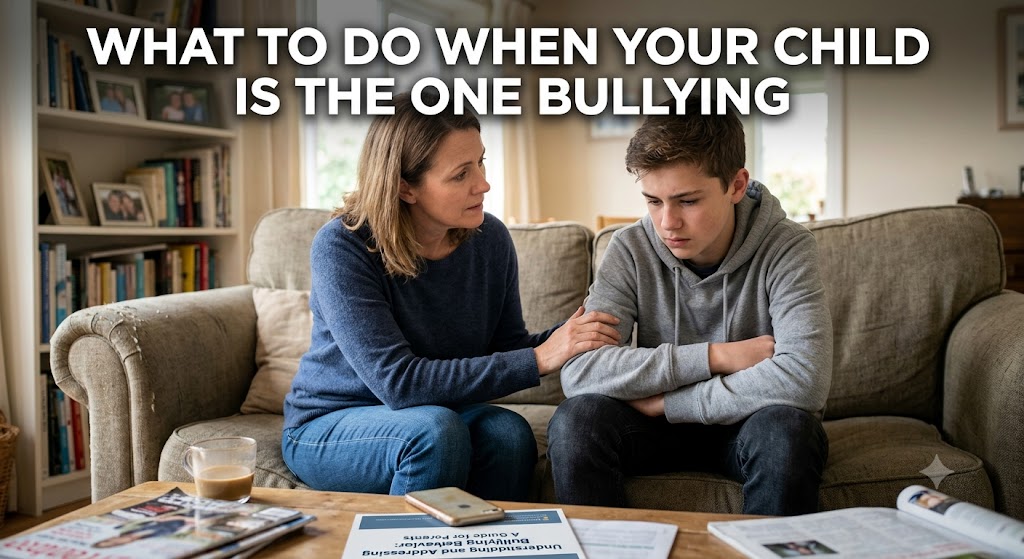
What to Do When Your Child Is the One Bullying

Discovering your teen bullies others is painful. But this moment is also an opportunity — because bullying behavior is almost always a signal that something deeper needs attention.

No parent wants to hear that their child is hurting others. The news often triggers shame, anger, denial, or confusion. But how you respond matters enormously — both for the teens your child has harmed and for your own child's development. Bullying behavior in adolescents is rarely about cruelty for its own sake. It is almost always driven by unmet emotional needs, poor social skills, a desire for status or control, or patterns learned from the teen's environment. Understanding the root cause is key to changing the behavior.
Teens rarely bully out of pure malice — the behavior almost always signals an unmet emotional or social need. Your first response sets the tone: stay calm, take it seriously, gather facts before defending, and make clear the behavior is unacceptable. Punitive-only responses do not produce lasting behavior change. The combination of clear consequences, empathy building, and professional support works best. Helping your teen make things right — through apology, restitution, and rebuilding trust — is more effective than punishment alone. Family environment factors, including criticism and derisive parenting, are linked to increased bullying behavior. Family therapy can help.

First Steps

What to Do First

What to do first, and how to turn this moment into change

You just found out your teen has been bullying someone. Maybe the school called. Maybe another parent confronted you. Maybe you saw it yourself. Whatever brought you here, the next few hours matter. Here is a step-by-step response:

1. Stay calm

Your emotional reaction will shape everything that follows. If you rage, your teen shuts down. If you dismiss it, they learn there are no consequences. Take a breath. You can feel your feelings later — right now you need to be clear-headed.

2. Take the report seriously

Do not dismiss what you have been told as exaggerated, one-sided, or impossible. Even if you are certain your teen would never do this, treat the report as credible until you have investigated. Denial at this stage teaches your teen that their actions will be excused.

3. Gather facts before defending

Talk to your teen. Ask what happened in their own words. Listen without interrupting. Then talk to the school, the other family, or whoever reported the behavior. Get as complete a picture as possible before deciding how to respond. Accounts will differ — your job is to understand the situation, not to build a defense.

4. Make clear the behavior is unacceptable

Be direct: "What happened is not okay. Hurting other people is not something our family accepts." This is not the moment for nuance or explanation. Your teen needs to hear an unambiguous statement that the behavior crossed a line.

5. Focus on repair and accountability

Consequences matter, but they should be paired with repair. What can your teen do to acknowledge the harm and begin to make it right? See the "How to Help Your Teen Make Things Right" section below.

6. Look underneath the behavior

Once the immediate situation is addressed, start asking the harder questions. Why did this happen? What need was your teen trying to meet? Are they being bullied themselves? Is something happening at home, at school, or in their emotional life that is driving this? The behavior will not change permanently until the root cause is addressed.

Why Teens Bully

Children and teens bully for a range of reasons. Understanding the motivation is the first step toward addressing the behavior:

Social status and belonging. Many teens bully to gain or maintain standing within a peer group. The desire to fit in or be seen as powerful can override empathy — especially if the group rewards aggressive behavior.

Prior victimization. A significant number of teens who bully have been bullied themselves. They may be attempting to regain a sense of control or redirecting their pain. Research shows that bully-victims — teens who both bully and are bullied — are at the highest risk for depression, behavioral difficulties, and suicidal thoughts.

Emotional regulation difficulties. Some teens lack the skills to manage frustration, anger, or insecurity in healthy ways. Bullying becomes a maladaptive coping strategy.

Home environment factors. Research from Florida Atlantic University found that derisive parenting — belittlement and sarcasm directed at teens — precipitates a cycle of anger that leads to increased bullying behavior and victimization. Family environments marked by criticism, hostility, or lack of warmth can model the idea that dominance solves problems.

Low self-esteem. Many bullies have poor self-esteem and bully others to feel powerful or in control. The behavior is compensatory, not confident.

How to Help Your Teen Make Things Right

Punishment tells your teen what they did wrong. Repair teaches them how to do better. Both matter, but repair is what produces lasting character change. Here is how to guide the process:

Apology when appropriate. A genuine apology is not "I'm sorry if you were offended." It names the specific behavior, acknowledges the harm, and does not include excuses. Help your teen craft an apology that is direct and sincere. Do not force it before they understand why it matters — a coerced apology teaches performance, not empathy. But do make clear that an apology will be expected.

Restitution if harm or damage occurred. If your teen damaged someone's property, stole something, or caused measurable harm, they should make it right. That may mean paying for a replacement, doing community service, or performing a task that directly addresses the impact. Restitution connects consequences to the specific harm caused.

Loss of privilege tied to the behavior. Consequences should be proportional and connected to the bullying, not arbitrary. If cyberbullying was involved, reduced screen time or supervised device use makes sense. If the bullying happened at a social event, loss of social privileges is appropriate. Random punishment — grounding for two weeks with no connection to the behavior — teaches resentment, not accountability.

Empathy-building conversation. This is the most important piece. Ask your teen to describe what the other person likely experienced. How did they feel? What was their day like after the incident? What would it be like to dread school because of someone in your class? Do not answer for them. Sit in the silence. Let them work through it. This is uncomfortable — and that discomfort is where empathy grows.

Repairing school and community trust. Your teen's reputation at school has been affected — with peers, teachers, and administrators. Help them think about how to rebuild trust over time, not through a single grand gesture but through consistent, respectful behavior. Work with the school on a plan that includes check-ins and accountability milestones. This teaches your teen that trust is earned through pattern, not promises.

Accountability and Compassion Together

Your teen needs to understand that their actions caused real harm and that there are consequences. But they also need to know you are not giving up on them — that you believe they are capable of doing better.

Research consistently shows that punitive-only approaches do not produce lasting change. Teens who are simply punished without understanding why become more secretive, not less aggressive. The combination of clear consequences, genuine repair, empathy building, and professional support produces the best outcomes.

While discovering your child bullies can be one of the more difficult parenting moments, lasting change is possible. Early intervention, education, and unconditional support can help your teen develop healthier ways of meeting their social and emotional needs.

Punishment tells your teen what they did wrong. Repair teaches them how to do better.

Sources: Florida Atlantic University / Concordia University — Derisive Parenting and Bullying (2019); StopBullying.gov; Center for Safe Schools (2023).


Frequently asked questions

Common questions
parents may have

Answers to some of the questions families often ask when trying to understand these challenges.

Why don’t coping skills always work?

The most common reasons: the skill does not match the function (a calming technique offered to a teen seeking sensation), the skill was introduced during a crisis rather than practiced beforehand, or the emotional intensity exceeded the skill’s capacity. When skills fail, it usually means the match or the timing needs adjustment — not that the teen is failing.

Why don’t coping skills always work?

The most common reasons: the skill does not match the function (a calming technique offered to a teen seeking sensation), the skill was introduced during a crisis rather than practiced beforehand, or the emotional intensity exceeded the skill’s capacity. When skills fail, it usually means the match or the timing needs adjustment — not that the teen is failing.

Why don’t coping skills always work?

The most common reasons: the skill does not match the function (a calming technique offered to a teen seeking sensation), the skill was introduced during a crisis rather than practiced beforehand, or the emotional intensity exceeded the skill’s capacity. When skills fail, it usually means the match or the timing needs adjustment — not that the teen is failing.

Frequently asked questions

Common questions

parents may have

Answers to some of the questions families often ask when trying to understand these challenges.

How do I help my teen apologize without forcing it?
Blue plus sign icon with rounded edges on a white background.

A forced apology teaches performance, not empathy. Start with the empathy-building conversation — help your teen understand the impact of their behavior on the other person. Once they genuinely grasp the harm caused, the apology becomes meaningful rather than scripted. Make clear that an apology will be expected, but invest the time to make it real.

Could my parenting be contributing to the bullying?
Blue plus sign icon with rounded edges on a white background.

Research shows that certain parenting patterns — particularly criticism, sarcasm, and belittlement — are associated with increased bullying behavior. This does not mean you are to blame, but it does mean that family dynamics may be worth examining. Family therapy can help identify and shift patterns that may be contributing.

Should I punish my teen for bullying?
Blue plus sign icon with rounded edges on a white background.

Clear consequences are important, but punishment alone does not produce lasting behavior change. The most effective approach combines accountability with repair — apology, restitution, empathy building — and professional support. Discipline without curiosity about what's driving the behavior often makes the teen more secretive rather than less aggressive.

Why is my child bullying other kids?
Blue plus sign icon with rounded edges on a white background.

Bullying behavior in teens typically serves an unmet need: social status, a sense of control, attention, or compensation for low self-esteem. A significant number of teen bullies have been bullied themselves. Understanding the motivation — not excusing the behavior — is the key to changing it.

Steps you can take to address the behavior and reach what is driving it:

Follow the "What to Do First" sequence

Stay calm. Take the report seriously. Gather facts before defending. Make the behavior clearly unacceptable. Focus on repair. Then look underneath. This sequence prevents the two most common mistakes: dismissing the report or overreacting without understanding.

Guide repair, not just punishment

Help your teen apologize sincerely, make restitution for harm caused, and rebuild trust through consistent behavior. Connect consequences to the specific behavior. Repair produces lasting character change where punishment alone produces resentment.

Model the behavior you expect

Examine how conflict, criticism, and power are handled in your household. Teens learn relational patterns from home. If they see adults using sarcasm, dominance, or dismissiveness to manage disagreements, those patterns transfer to peer relationships.

Help your teen build empathy for the people they hurt

Lasting change comes when your teen can genuinely picture the impact of what they did. Without shaming them, invite them to imagine how the other person felt and what their day was like afterward. Ask questions instead of delivering verdicts, so they arrive at the understanding themselves. Teens who can feel the weight of their actions are far more likely to choose differently than teens who only learned to avoid getting caught.

Explore helpful resources

Helpful guides and articles for families seeking more information and support.

should connect to any other Parent Resources articles.

Bullying behavior is almost always a signal that something deeper needs attention, and addressing it now can change your teen's path. At Idaho Youth Ranch, our therapists help families understand the roots of the behavior and guide teens toward healthier ways of relating to others.

Get Started

If Your Teen's Behavior Is Concerning You, We Can Help

Bullying behavior is a signal, not a sentence. Our therapists help teens build empathy, emotional regulation, and healthier social strategies — and we support parents in navigating the situation alongside them.

Outline of Idaho state inside a heart behind three person icons representing community or support.

For more than 70 years, we've stood beside Idaho's youth and families.

Hope. Healing. Resilience.

Blue phone handset icon with two curved lines indicating sound or call signal.

Call Now

Speak with our Team directly.

Best for families who want to talk through next steps, ask questions, or connect with admissions for the Residential Center for Healing & Resilience.