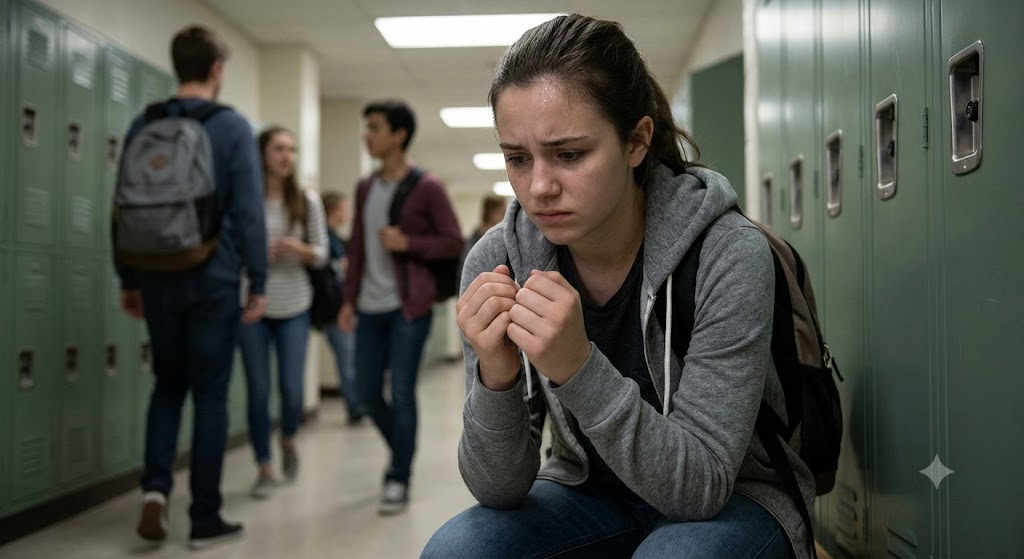
When Worry Shows Up Physically
Why Anxiety Becomes Physical
Why anxiety can look like stomachaches, headaches, or chest tightness in teens
Anxiety is not only a thought problem. It is a full-body alarm response. When the brain senses danger — whether the threat is physical or emotional — it activates the fight-or-flight system. Stress hormones increase. Breathing changes. Muscles tense. Digestion slows. Heart rate rises. The body prepares to protect itself.
That is useful in a true emergency. But when the nervous system is reacting to school stress, social fear, perfectionism, trauma, or chronic worry, those same body changes can feel confusing and frightening. For teens especially, physical symptoms may be the most visible part of anxiety. Some adolescents do not have the language to say "I'm overwhelmed." They say "My stomach hurts," "I feel sick," or "I can't breathe right."
Common Physical Symptoms of Anxiety in Teens
Anxiety can show up as stomachaches or abdominal pain, nausea or loss of appetite, headaches, chest tightness or chest pain, rapid heart rate or heart pounding, shortness of breath or feeling unable to get a full breath, dizziness or lightheadedness, shaking or trembling, sweating, muscle tension, jaw clenching, or body aches, trouble sleeping or waking during the night, and fatigue from a body that is constantly on alert. These symptoms are especially common before school, presentations, sports, tests, social events, family conflict, or any situation the teen feels unable to control.
The Pattern Parents Should Watch For
The most useful question is often not "Is this symptom real?" It is real. The better question is: "When does it happen, and what seems to happen around it?" Possible anxiety patterns include stomachaches that reliably appear on school mornings, headaches before tests, games, or performances, nausea before social events or group activities, chest tightness during conflict or at bedtime, dizziness when the teen is overwhelmed, embarrassed, or pressured, and physical complaints that improve when the stressful situation is removed. This pattern-based approach helps parents avoid two common mistakes: dismissing symptoms too quickly, and chasing only medical explanations while missing the underlying anxiety.
Why Anxiety Often Looks Like a Medical Problem
Many anxiety symptoms overlap with ordinary medical concerns. A teen with anxiety may look like they have a stomach bug, migraines, heart trouble, breathing problems, chronic fatigue, or a neurological issue. Sometimes parents end up in a frustrating cycle: repeated symptoms, unclear test results, temporary reassurance, then symptoms again. When medical providers rule out serious causes and the symptoms continue in stress-linked patterns, anxiety should move higher on the list of possibilities. That does not mean the symptoms are fake. It means the nervous system may be driving the symptoms.
When Parents Should Start With a Pediatrician
It is appropriate to begin with a medical evaluation when symptoms are new, symptoms are severe, chest pain, fainting, significant weight loss, persistent vomiting, or other concerning changes are present, there is no obvious stress pattern yet, or you are unsure whether the symptoms could reflect a medical condition. A pediatrician can help rule out medical issues that may mimic anxiety or contribute to it.
When Anxiety Is the More Likely Driver
Anxiety becomes more likely when the same symptoms happen around the same stressful triggers, medical workups are normal, the teen is also showing avoidance, reassurance-seeking, irritability, or perfectionism, symptoms improve when the feared situation is canceled or postponed, and physical complaints are interfering with school, sleep, friendships, or daily functioning. In these cases, treating the anxiety often reduces the physical symptoms too.
What Parents Can Do in the Moment
If your teen is having physical symptoms that appear anxiety-related, stay calm, take the symptom seriously without escalating it, help them slow down and ground in the present, and name what may be happening: "Your body may be reacting to stress right now." Avoid long medical debates in the moment if immediate danger is not present. What helps most is a response that communicates: "I believe you. Your body is reacting strongly. Let's help it settle." That is more effective than either extreme — "You're fine, stop worrying" or panicked reassurance that treats every episode like a catastrophe.
The Reassurance Trap
When teens are frightened by physical symptoms, they often ask the same questions repeatedly: "Are you sure I'm okay?" "What if something is wrong with me?" Repeated reassurance may calm them briefly, but over time it can strengthen the anxiety loop. Reassurance-seeking is a form of avoidance: it reduces uncertainty temporarily but teaches the teen to depend on outside certainty instead of learning that they can tolerate discomfort safely. A better response is calm, limited reassurance plus redirection: "I know this feels scary." "What happened last time?" "Let's help your body settle and see what changes."
When to Seek Mental Health Support
Consider a professional evaluation when physical symptoms happen repeatedly with stress or avoidance, symptoms are disrupting school attendance, sleep, eating, or social functioning, medical providers have ruled out serious causes but the symptoms continue, your teen is becoming fearful of the symptoms themselves, or home strategies are not making a difference. CBT is especially effective because it helps teens understand the connection between thoughts, body sensations, and avoidance.
Anxiety symptoms are real body symptoms. The question is not whether your teen is feeling them — it is what is driving them, and what help will actually work.
Sources: NIMH Anxiety Statistics; CDC Youth Mental Health Data; Child Mind Institute — Physical Symptoms of Anxiety in Kids and Teens.