When Both Are Present
Why Depression and Anxiety Travel Together
Why depression and anxiety travel together, and why treating both matters
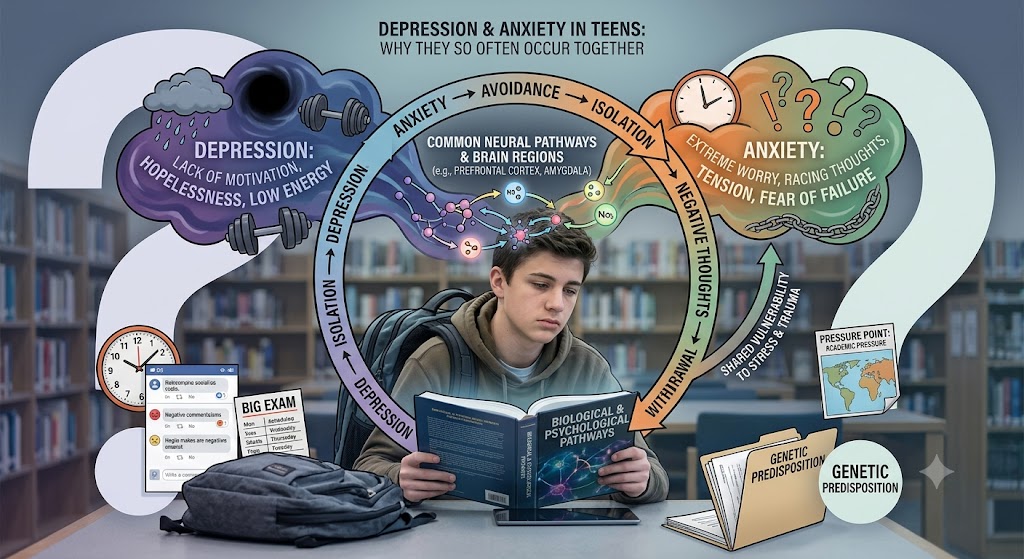
Parents often think of depression and anxiety as opposite problems — depression as too little energy and anxiety as too much. But in the adolescent brain, these conditions are deeply intertwined. They share genetic vulnerability, overlapping neurotransmitter disruptions, and common environmental triggers. Brain imaging studies show similar abnormalities in the prefrontal cortex and amygdala in teens with either condition, which helps explain why one so frequently leads to the other.
The relationship is bidirectional: anxiety can cause a teen to withdraw and avoid, which leads to isolation and hopelessness — fueling depression. Depression can drain motivation and confidence, making everyday situations feel threatening — fueling anxiety. Once both conditions are present, they create a self-reinforcing cycle that's difficult to break without professional intervention.
Signs That Both Conditions May Be Present
Because the symptoms overlap so heavily, parents often struggle to tell whether they're looking at depression, anxiety, or both. Watch for this combination:
- Persistent worry and persistent sadness or emptiness.
- Difficulty sleeping — either unable to fall asleep (anxiety) or sleeping too much (depression), sometimes alternating.
- Avoidance of situations that used to be manageable — school, social events, activities.
- Irritability and emotional reactivity that seems disproportionate.
- Physical complaints like stomachaches, headaches, or muscle tension with no medical cause.
- Difficulty concentrating, making decisions, or starting tasks.
- Withdrawal from friends and family combined with restlessness or agitation when alone.
- Perfectionism that feels driven by fear of failure, paired with declining motivation.
How to Tell the Difference — and Why It's Hard
Some symptoms point more clearly to one condition than the other:
- More anxiety-driven: excessive worry about future events, avoidance of specific situations, need for reassurance, physical tension, panic attacks, difficulty tolerating uncertainty.
- More depression-driven: persistent sadness or emotional flatness, loss of interest in activities, feelings of worthlessness, fatigue and low energy, slowed thinking, expressions of hopelessness.
- Overlapping: sleep disruption, irritability, social withdrawal, difficulty concentrating, physical complaints, declining school performance.
The overlapping zone is large, which is why a professional evaluation matters. A qualified therapist can distinguish between the conditions and design treatment that addresses both.
Why Treating Both Matters
When only one condition is treated, the untreated condition often undermines recovery. A teen receiving therapy for depression may make progress on mood and motivation, but if underlying anxiety isn't addressed, avoidance patterns persist and progress stalls. A teen treated only for anxiety may learn coping strategies for worry but still feel empty, unmotivated, and hopeless.
Evidence-based therapies like CBT and DBT are effective for both conditions simultaneously. CBT in particular helps teens identify and challenge the negative thought patterns that fuel both anxious worry and depressive hopelessness. When medication is recommended, SSRIs treat both depression and anxiety, which is one reason they're often the first-line pharmacological option.
The most important thing for parents to know: comprehensive treatment that addresses both conditions produces significantly better outcomes than treating either one alone.
When Parents Should Seek Help
If your teen is showing signs of both anxiety and depression, consider reaching out to a professional if:
- They're avoiding school, social situations, or activities they used to enjoy.
- You're seeing both low mood and high worry persisting for two weeks or more.
- Physical symptoms keep recurring with no medical explanation.
- Their daily functioning — sleep, grades, friendships — is declining across multiple areas.
- They seem caught in a cycle of avoidance and withdrawal that you can't break at home.
You don't need to determine whether it's depression, anxiety, or both before seeking help. A professional assessment will clarify the diagnosis and ensure treatment covers the full picture.
Sources: NIMH comorbidity data; JAMA Network Open (2024), depression and anxiety among US children and young adults; CDC 2024 Youth Risk Behavior Survey (YRBS); Annie E. Casey Foundation youth mental health statistics (2024); South Denver Therapy teen mental health statistics compilation (2025).