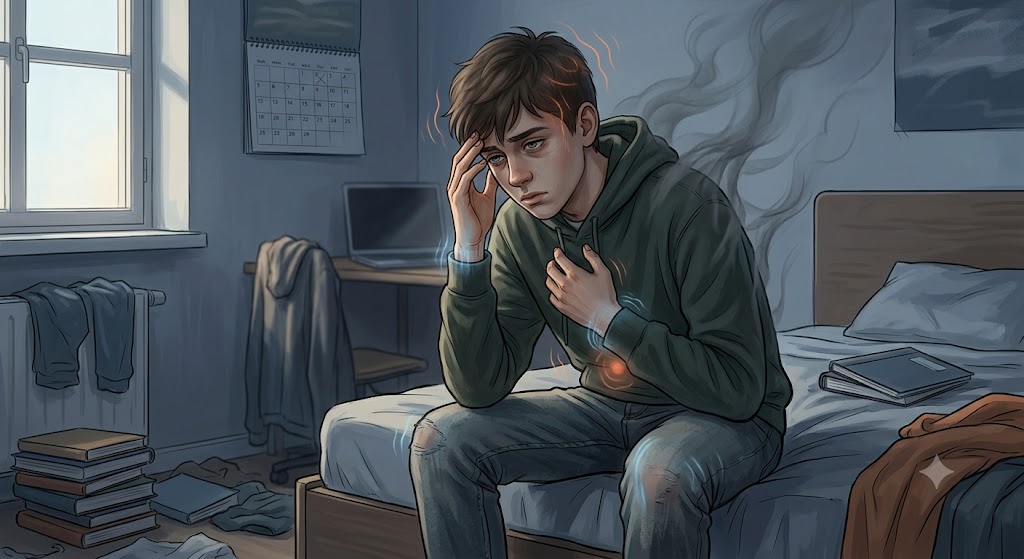
Physical Symptoms of Teen Depression: When the Body Speaks for the Mind

Headaches, stomachaches, and fatigue that doctors can't explain may be telling you something important.

Your teen keeps complaining of headaches. Or stomachaches before school. Or a bone-deep exhaustion that sleep doesn't fix. You've been to the doctor, maybe more than once, and the tests come back normal. Here's what many parents don't know: physical symptoms with no medical explanation are one of the most common — and most overlooked — signs of depression in adolescents. Research shows that up to 73% of depressed teens report fatigue as a primary symptom, and about one in three adolescents with depression or anxiety experience clinically significant physical complaints. When the body hurts and doctors can't find a cause, depression should be on the list.
Depression frequently manifests as physical symptoms in teens — headaches, stomachaches, body aches, and chronic fatigue. Up to 73% of depressed teens report extreme tiredness as a primary symptom. Sleep problems affect a similar proportion. The gut-brain connection means depression can directly cause digestive symptoms like nausea, cramping, and appetite changes. Younger teens are especially likely to express emotional pain through physical complaints because they lack the vocabulary for what they're feeling. If medical tests come back normal but symptoms persist, a mental health evaluation should be the next step.

When the Body Speaks

Why Depression Causes Physical Pain

Why depression can show up as headaches, stomachaches, and fatigue

Depression isn't just a mental health condition — it's a whole-body experience. The same neurotransmitter disruptions that cause sadness, hopelessness, and loss of motivation also affect how the body processes pain, regulates sleep, manages digestion, and maintains energy. Serotonin and norepinephrine, the chemicals most involved in depression, also play key roles in pain signaling and gut function. When these systems are disrupted, the body responds with real, measurable physical symptoms.

For adolescents, this mind-body connection is especially strong. Younger teens in particular often lack the emotional vocabulary to describe what they're feeling internally, so their distress shows up in the body first. A teen who says "My stomach hurts" may be accurately describing the physical sensation of anxiety or depression — not making it up, not exaggerating, and not seeking attention.

Physical Symptoms Parents Should Watch For

  • Chronic headaches — frequent or daily, often tension-type, not responsive to typical treatment.
  • Stomachaches, nausea, or digestive issues — recurring complaints especially before school or social situations.
  • Extreme fatigue — tiredness that sleep doesn't resolve, low energy throughout the day.
  • Sleep disruption — difficulty falling asleep, waking during the night, or sleeping excessively.
  • Unexplained body aches — back pain, muscle tension, or joint pain without injury or physical cause.
  • Appetite or weight changes — eating significantly more or less than usual, noticeable weight shifts.
  • Frequent illness — lowered immunity from chronic stress, catching colds or infections more easily.
  • Menstrual cycle changes — irregular periods or worsening PMS symptoms in teen girls.

The Gut-Brain Connection: Why Depression Hits the Stomach

The brain and digestive system are directly connected through the vagus nerve and share many of the same neurotransmitters. In fact, roughly 95% of the body's serotonin is produced in the gut, not the brain. When depression disrupts serotonin regulation, the digestive system often reacts with nausea, cramping, constipation, diarrhea, or loss of appetite.

This is why so many depressed teens complain of stomachaches — and why those complaints are frequently dismissed as attention-seeking or school avoidance. The pain is real. It has a biological mechanism. And it's telling you something important about your teen's mental health.

Fatigue and Sleep: The Depression-Exhaustion Cycle

Fatigue is the single most commonly reported physical symptom of teen depression. One study found that 73% of adolescents with depression identified extreme tiredness as a primary complaint, and 72% reported significant sleep problems — mostly insomnia, despite feeling exhausted.

Depression creates a cruel cycle: the condition causes fatigue and sleep disruption, and poor sleep makes depression worse. Teens who can't fall asleep often turn to screens, which further delays sleep onset. The resulting exhaustion impairs concentration, motivation, and emotional regulation — all of which deepen the depression. Parents often notice this as a teen who "can't get out of bed" but also "can't fall asleep at night." Both are depression symptoms, not laziness.

How to Tell When Physical Symptoms Point to Depression

Not every headache is depression. But physical symptoms are more likely to signal a mental health issue when they:

  • Persist for weeks without a clear medical cause.
  • Show up alongside mood changes, withdrawal, or loss of interest.
  • Worsen in connection with stressful situations (school, social events).
  • Don't respond to typical medical treatment.
  • Appear in clusters — headaches plus fatigue plus stomach issues together.

The pattern matters more than any single symptom. When a teen has recurring physical complaints that medical testing can't explain, and those complaints appear alongside changes in mood, energy, sleep, or behavior, depression is a strong possibility.

When Parents Should Seek Help

A helpful first step is a visit to your teen's pediatrician to rule out underlying medical causes — thyroid dysfunction, anemia, sleep disorders, and other conditions that can mimic depression symptoms. If medical testing comes back normal but the symptoms persist, the next step is a mental health evaluation.

Consider seeking a mental health assessment if:

  • Physical complaints have persisted for two weeks or more with no medical explanation.
  • Your teen is also showing mood changes, social withdrawal, or declining motivation.
  • They're visiting the school nurse frequently or asking to stay home from school.
  • Sleep problems and fatigue are affecting their daily functioning.
  • You've tried medical interventions and the symptoms aren't improving.

You don't need to be certain it's depression. A professional can help determine what's happening and whether treatment would help.

Sources: Mission Prep Healthcare, "Physical Warning Signs of Teen Depression" (2025); WebMD, "Physical Symptoms of Depression"; Annals of General Psychiatry, somatic symptoms prevalence in adolescents (2025); Mayo Clinic, "Teen Depression Symptoms"; SingleCare, "Teen Mental Health Statistics" (2025).


Frequently asked questions

Common questions
parents may have

Answers to some of the questions families often ask when trying to understand these challenges.

Why don’t coping skills always work?

The most common reasons: the skill does not match the function (a calming technique offered to a teen seeking sensation), the skill was introduced during a crisis rather than practiced beforehand, or the emotional intensity exceeded the skill’s capacity. When skills fail, it usually means the match or the timing needs adjustment — not that the teen is failing.

Why don’t coping skills always work?

The most common reasons: the skill does not match the function (a calming technique offered to a teen seeking sensation), the skill was introduced during a crisis rather than practiced beforehand, or the emotional intensity exceeded the skill’s capacity. When skills fail, it usually means the match or the timing needs adjustment — not that the teen is failing.

Why don’t coping skills always work?

The most common reasons: the skill does not match the function (a calming technique offered to a teen seeking sensation), the skill was introduced during a crisis rather than practiced beforehand, or the emotional intensity exceeded the skill’s capacity. When skills fail, it usually means the match or the timing needs adjustment — not that the teen is failing.

Frequently asked questions

Common questions

parents may have

Answers to some of the questions families often ask when trying to understand these challenges.

Are physical symptoms of depression more common in younger teens?
Blue plus sign icon with rounded edges on a white background.

Yes. Younger adolescents are more likely to express emotional distress through physical complaints because they may lack the emotional vocabulary to describe what they're feeling. A 12-year-old who says "My stomach hurts" may be accurately describing the physical sensation of depression without recognizing the emotional component.

Why is my depressed teen so tired all the time?
Blue plus sign icon with rounded edges on a white background.

Fatigue is the most commonly reported physical symptom of teen depression. Depression disrupts sleep quality and energy regulation at a neurological level. Even teens who sleep a lot may wake unrefreshed because depression prevents restorative sleep. This exhaustion impairs concentration, motivation, and emotional regulation, creating a cycle that deepens the depression.

My teen keeps complaining of stomachaches but the doctor says nothing is wrong. What should I do?
Blue plus sign icon with rounded edges on a white background.

When medical testing rules out physical causes but the complaints persist, it's time to consider a mental health evaluation. The gut and brain are directly connected, and depression can cause real digestive symptoms. Ask your pediatrician about screening for depression or anxiety, or contact a mental health provider directly.

Can depression cause real physical pain in teenagers?
Blue plus sign icon with rounded edges on a white background.

Yes. Depression involves neurotransmitter disruptions that directly affect pain signaling, digestion, and energy regulation. The headaches, stomachaches, and body aches your teen reports are not imagined — they have a biological mechanism. Research shows that depression can make people three times more likely to experience migraines and four times more likely to report disabling body pain.

Ways to respond when your teen's body may be carrying what their mind cannot yet say:

Start With the Pediatrician, but Don't Stop There

A medical exam is the right first step to rule out physical conditions. But if tests come back normal and symptoms persist, ask the doctor about depression screening or request a referral to a mental health professional. Don't cycle through endless medical specialists when the answer may be psychological.

Take the Complaints Seriously — They're Not Faking It

Telling a teen their pain "isn't real" or "it's all in your head" dismisses their experience and makes them less likely to communicate with you. The pain is real. Validating it while also exploring what might be driving it is the most productive approach.

Track the Pattern — When, Where, and What Else Is Happening

Note when symptoms appear (mornings before school? Sunday nights?), what they coincide with (social situations? tests?), and what else is changing (mood, sleep, appetite, friendships). This pattern data helps a provider distinguish between medical and psychological causes.

Loop the School Nurse and Teachers Into What You Are Seeing

If headaches or stomachaches keep pulling your teen out of class, the people at school often have useful information you do not. Let the school nurse and a trusted teacher know what you are noticing, and ask what they see during the day. You may learn that the symptoms cluster around certain classes, lunch, or social situations. That pattern can point toward what is really driving the pain, and it keeps your teen from quietly falling behind while you work to understand the cause.

Explore helpful resources

Helpful guides and articles for families seeking more information and support.

should connect to any other Parent Resources articles.

When the tests come back normal but your teen still hurts, that is worth taking seriously. At Idaho Youth Ranch, our therapists help teens whose depression shows up in the body, and can work alongside your pediatrician to find what is really going on.

Get Started

When the Tests Come Back Normal But Your Teen Still Hurts

Physical symptoms without a medical cause may be your teen's body asking for a different kind of help. Our therapists can help you figure out what's happening underneath.

Outline of Idaho state inside a heart behind three person icons representing community or support.

For more than 70 years, we've stood beside Idaho's youth and families.

Hope. Healing. Resilience.

Blue phone handset icon with two curved lines indicating sound or call signal.

Call Now

Speak with our Team directly.

Best for families who want to talk through next steps, ask questions, or connect with admissions for the Residential Center for Healing & Resilience.