Equine Therapist
Therapy that happens in the arena, not the office.


Equine-assisted therapy at Idaho Youth Ranch is not an add-on activity or a feel-good complement to "real" treatment. It is a full clinical track, grounded in the EAGALA model, integrated into Idaho Youth Ranch's interdisciplinary treatment teams, and delivered by licensed therapists who carry their own caseloads and make clinical decisions with the same rigor expected in any other therapeutic setting.
What makes this setting rare is the combination: a clinically integrated equine program inside an organization with genuine therapeutic infrastructure, structured supervision, and a population where experiential, relationship-centered work opens doors that traditional office-based therapy often can't.
If you hold an LMSW, LCSW, LPC, LCPC, LMFT or Psy D., and you've been looking for a clinical setting that matches your belief in what therapy can be when it moves beyond the four walls of an office, this role is worth a serious look.
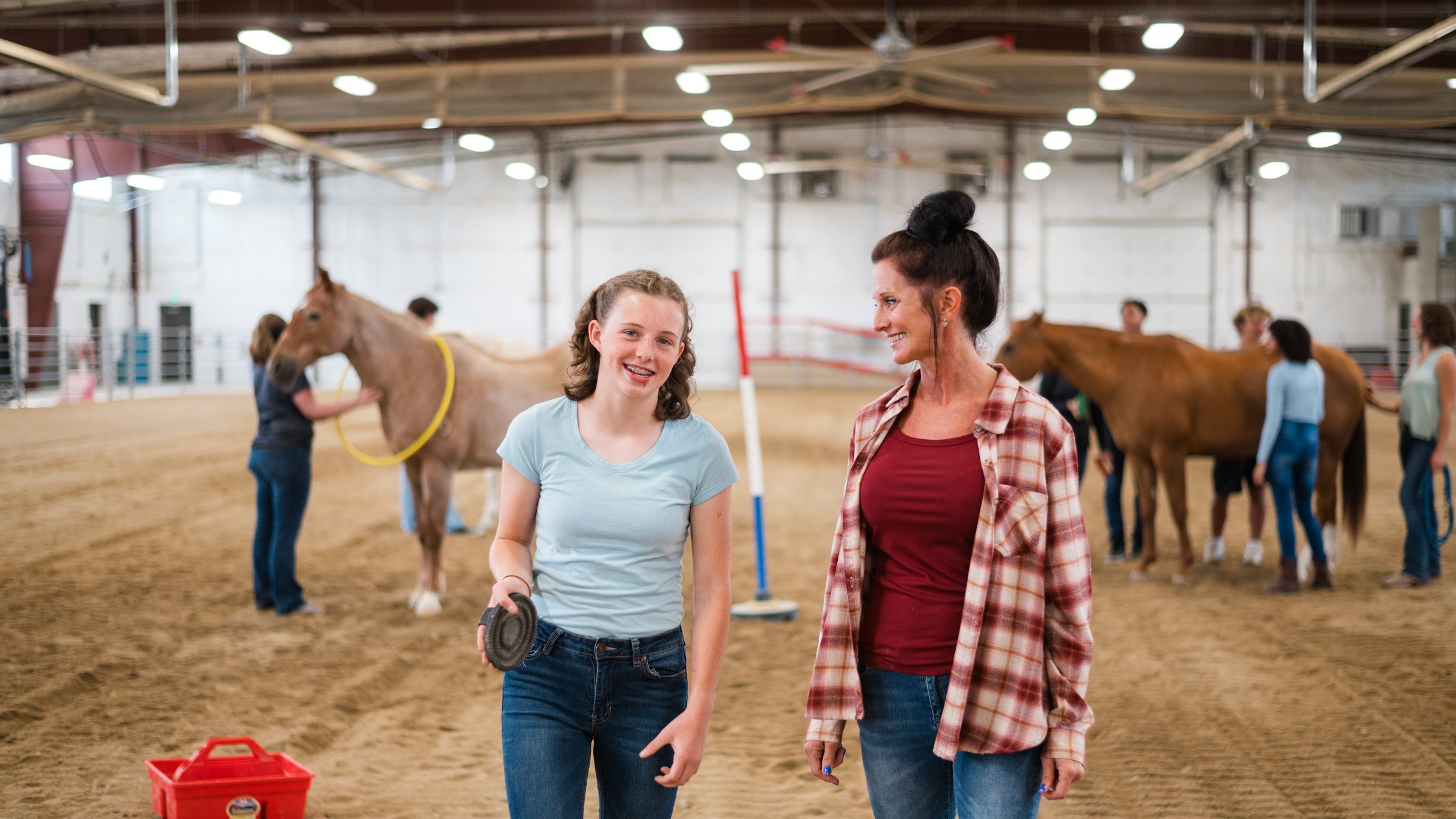
The work, honestly described
As an equine therapist at Idaho Youth Ranch, you carry your own caseload of youth and deliver therapy using the EAGALA (Equine Assisted Growth and Learning Association) model, a structured, evidence-informed approach to equine-assisted psychotherapy that centers on the relationship between the client and the horse as the therapeutic mechanism. Sessions happen in the arena, not at a desk. The clinical thinking happens at the same depth as any other modality.
You'll work alongside trained equine specialists who manage horse safety and handling during sessions. Your focus stays on the clinical work: observing, facilitating, processing, and applying your clinical judgment to what's happening between the youth and the horses in front of you. Treatment planning, progress documentation, and coordination with the broader treatment team are all part of the role, just as they are for any therapist at Idaho Youth Ranch.
The youth you'll work with are navigating complex trauma, behavioral health challenges, and family disruption. Many have struggled in traditional therapy settings. Equine-assisted therapy works differently. It's experiential, nonverbal at times, and built around a relationship with an animal that responds honestly and in real time. For youth who are guarded, resistant, or simply exhausted by talking, the arena can be the place where therapy finally becomes accessible.
Start your next chapter
The Residential Center and Hays House are both hiring. Find your fit.
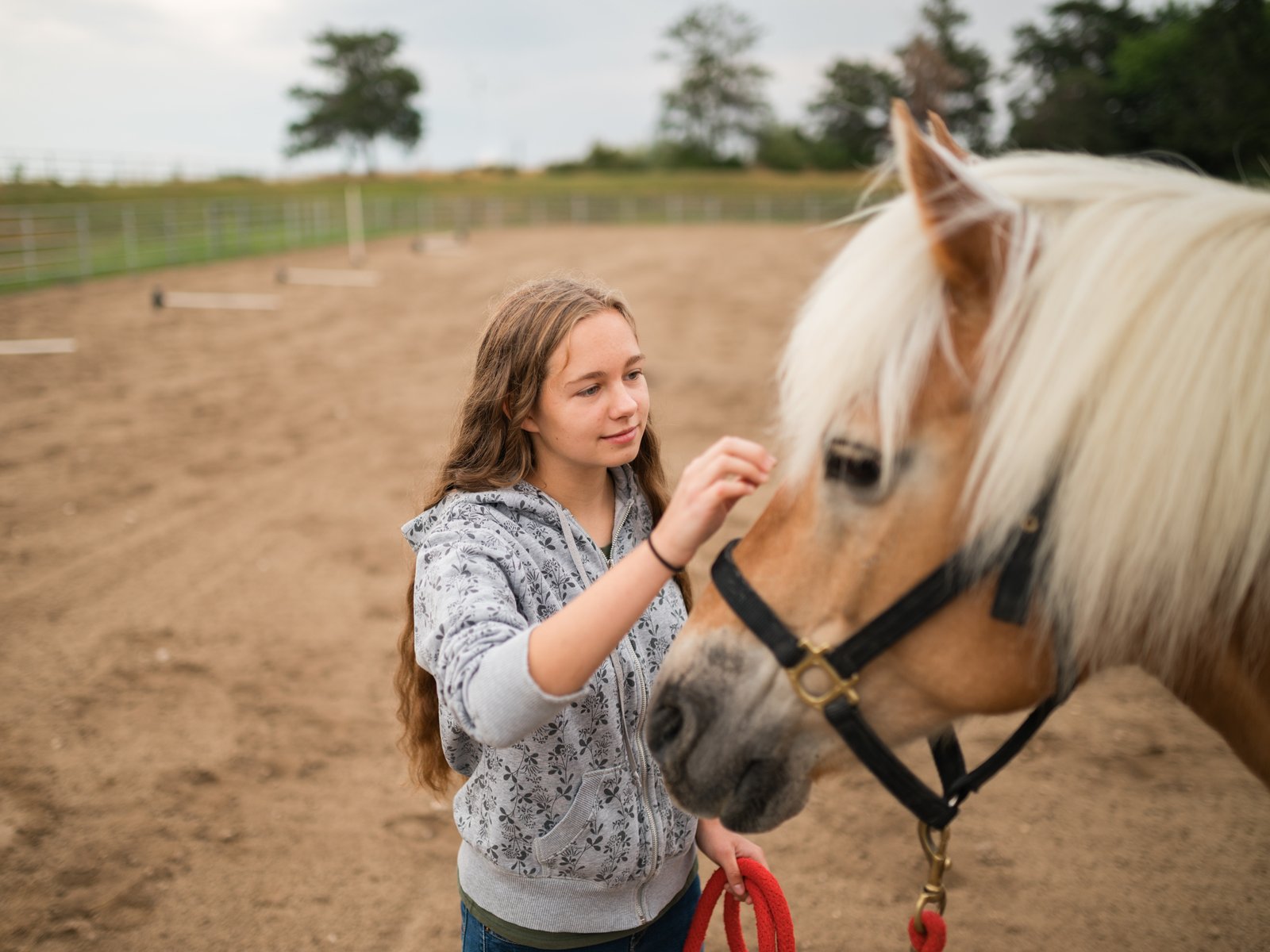
The EAGALA model and what it requires
Idaho Youth Ranch's equine program operates under the EAGALA model, a team-based approach where a licensed therapist and a trained equine specialist work together in every session. The therapist leads the clinical work; the equine specialist manages horse safety and contributes observations about horse behavior. This team structure is a core feature of EAGALA and one of the reasons the model maintains the clinical rigor that distinguishes it from recreational horse programs. EAGALA is an entirely ground-work-based model.
If you're already EAGALA certified
You'll step into this role with the clinical framework already in place. Idaho Youth Ranch's program gives you a structured setting, a genuine interdisciplinary team, and a population where EAGALA certification translates into meaningful clinical impact.
If you're new to equine-assisted therapy
Idaho Youth Ranch provides EAGALA certification during your career at Idaho Youth Ranch. If you're a licensed clinician who has been drawn to experiential or relationship-centered approaches but hasn't yet pursued equine-assisted therapy, this is an organization that will invest in getting you there, and give you the clinical infrastructure to practice it well.
Do I need horse experience?
Previous horse experience is not required. Trained equine specialists manage horse safety and handling alongside the clinical team. Your job is to be the therapist in the arena. The equine specialists ensure the horses and the physical environment are safe for that work to happen. If you have horse experience, it's an asset. If you don't, it's not a barrier.
Your team and your clients
The Clients
Youth on your caseload are navigating complex behavioral health needs: trauma histories, emotional regulation challenges, relational difficulties, and mental health conditions that benefit from experiential, nontraditional therapeutic approaches. Many have been through multiple treatment settings. The arena offers something different, a space where the therapeutic relationship is mediated through interaction with horses, where nonverbal communication matters as much as words, and where progress often shows up in behavior before it shows up in language.
Family involvement is part of the work where it is safe and appropriate. Equine-assisted family sessions can be powerful. The dynamics that play out between family members and horses often make visible what traditional family therapy keeps beneath the surface.
Equine Specialists
Your closest working partner in every session. Equine specialists bring expertise in horse behavior, safety, and management. The EAGALA model requires this team approach; you're never working alone in the arena. The specialist manages the animal environment; you lead the clinical work. The partnership between therapist and specialist is what makes the model function.
Clinical Supervision
You'll receive regular clinical supervision from leadership experienced in both traditional and equine-assisted therapeutic approaches. Supervision is scheduled, substantive, and designed to support your development as a clinician in this specialty setting.
Why equine therapy at Idaho Youth Ranch is different
- EAGALA model with genuine team structure: a therapist and an equine specialist in every session
- You carry your own caseload and make your own clinical decisions. This is a therapist role, not an adjunct activity
- EAGALA certification provided and paid if you're new to equine-assisted therapy
- Two locations: Hands of Promise Campus in the Treasure Valley and Coeur d'Alene
- A population where experiential therapy genuinely changes outcomes. Youth who struggle in traditional settings often engage differently in the arena
- Structured clinical supervision, paid CEUs, and organizational support for deepening your equine therapy specialization
- A mission with 70 years of history serving Idaho's most vulnerable youth
What to expect

Schedule
Equine therapists are expected to carry approximately 22 sessions per week. Sessions take place in the arena across seasons, with treatment planning, documentation, and treatment team coordination as part of the weekly rhythm.

Benefits
- Medical, dental, and vision insurance
- Paid time off and paid holidays
- 401(k) with 100% employer match up to 4%
- EAGALA certification training provided and paid for as part of onboarding
- Paid continuing education, including CEUs required for licensure maintenance
- Licensure support and clinical supervision toward advanced credentials
- Employee Assistance Program (EAP)
- Eligible employer for Public Service Loan Forgiveness (PSLF) [confirm and add disclaimer if needed]
What we're looking for
Required Qualifications
- LMSW, LCSW, LPC, LCPC, LMFT or Psy D. with licensure in Idaho (or eligible for reciprocity)
- EAGALA certification, or willingness to complete certification through Idaho Youth Ranch's paid training program as part of onboarding
- Experience providing individual, group, or family therapy, ideally with youth or trauma-exposed populations
- Comfort working outdoors in an arena environment across seasons
- Strong clinical documentation skills
- Commitment to ethical, trauma-informed, relationship-centered clinical practice
Preferred Qualifications
- Current EAGALA certification
- Previous experience with equine-assisted therapy or experiential therapeutic modalities
- Horse experience (handling, groundwork, or general equine knowledge), helpful but not required
Ready to practice in the arena?
If you're a licensed clinician who believes therapy can look different, and you want to practice in a setting where that belief is backed by real clinical infrastructure, real supervision, and a population that genuinely benefits from this work, we'd like to hear from you. Whether you're already EAGALA certified or ready to pursue it, our hiring team is glad to talk through the role before you apply.