






Therapy modalities

DBT Therapy for Teens & Young Adults

An evidence-based, skills-focused therapy designed for young people who feel emotions intensely and need practical tools for managing them without making things worse.

Dialectical Behavior Therapy (DBT) was developed for situations where standard therapy struggles to land, where emotions arrive too big, too fast, and too overwhelming, and where the way a young person tries to cope is making things harder rather than easier. Self-harm, explosive arguments, intense relationship conflict, and impulsive decisions during crisis are all places DBT was specifically designed to help.

At Idaho Youth Ranch, trained clinicians use DBT as part of a personalized treatment plan for youth and young adults ages 9–24. We offer DBT through outpatient counseling in Boise and Coeur d’Alene, and through residential care at our RCH&R campus. It is one of several evidence-based approaches we offer.

Gold seal with text The Joint Commission National Quality Approval and a geometric design in the center.

Reviewed by Idaho Youth Ranch Clinical Team

May 20, 2026
House icon with a plus sign inside representing home addition or expansion.

Medicaid and most private insurance accepted

Blue calendar icon with three ring binders on top and empty date area below.

Ages 9–24

Boise

Coeur d’Alene

RCH&R (residential)

Best For

Intense emotion dysregulation, self-harm, chronic crisis patterns, impulsive behavior, relationship and family conflict

Age Range

Youth and young adults, ages 12–24 (adolescent-adapted versions of DBT skills available for younger teens)

Session Format

Individual sessions + DBT skills group; family involvement supported

Typical Length

Programs typically run several months and are tailored to each young person’s situation and progress

Parent Involvement

Moderate to High (depending on the format)

Evidence Level

Evidence-based for adolescent self-harm;supported by multiple randomized controlled trials including Mehlum et al.(2014) and McCauley et al. (2018, CARES trial)

Available Through

Outpatient counseling, residential care (RCH&R)

Sad teenage boy sits alone at cafeteria table with a sandwich, apple, and milk carton on tray.

Is This Right for My Child?

Every teen is different, and no single therapyfits everyone. These signals can help you and an Idaho Youth Ranch cliniciandecide together whether DBT is a good starting point. DBT is a significantcommitment, it asks more from families than most therapies. It was designed forsituations that need that level of investment.

May Be a Good Fit If

  • Your teen experiences emotions intensely and has difficulty bringing them back down once they spike.
  • Your teen has been hurting themselves, or has thoughts of hurting themselves, and needs skills for handling intense emotions without acting on them.
  • Your teen has frequent crises, emotional, behavioral, or relational, and standard talk therapy hasn’t produced lasting change.
  • Your teen acts impulsively in ways that cause real consequences, particularly when emotions are running high.
  • Family relationships have become a major source of conflict and you’re looking for an approach that involves you directly in learning new skills alongside your teen.
  • Your teen is willing, even reluctantly, to commit to the structure DBT requires: a weekly individual session, a weekly skills group, and practice between sessions.

May Not Be the First Step If

DBT may need to wait while a different kind of support comes first if:

  • Your teen is in immediate, acute crisis requiring emergency stabilization. DBT works at a pace that assumes a baseline of safety and engagement that may not be possible during active crisis.
  • Your teen’s primary concern is unprocessed trauma without significant emotion-regulation difficulties. EMDR or TF-CBT may be the better starting point.
  • Your teen’s primary concern is anxiety or depression without significant emotion dysregulation. CBT may be a better fit and is typically less intensive.
  • Your teen is unable or unwilling to participate in the multiple components DBT requires. DBT’s effectiveness depends on engagement across the skills approach, not just one piece of it.
  • Your family is unable to commit to the family involvement DBT typically asks for.

Higher Level of Care Note

If your child is in active crisis, residential or inpatient stabilization may need to come first. DBT works best when a young person is stable enough to engage with weekly structured sessions and skills practice. If you’re not sure where to start, the Idaho Youth Ranch admissions team can help you think it through. For immediate crisis support, call or text 988, the Suicide & Crisis Lifeline is available 24/7.

Ask a Clinician If

  • Your teen has multiple co-occurring concerns and you’re not sure whether DBT or another approach should come first.
  • You’re weighing DBT against a less time-intensive option and want help understanding the tradeoffs.
  • Past therapy hasn’t helped and the patterns at home keep escalating, DBT may be designed for exactly this situation.
  • You’re worried about your teen’s safety and want to understand whether outpatient DBT is appropriate or whether a higher level of care should come first.
Teenage boy with headphones talks and smiles while seated across from woman holding pen in a cozy room.

Not sure if

DBT

is the right fit?

What Is DBT?

Dialectical Behavior Therapy (DBT) is a structured, evidence-based therapy that teaches specific skills for managing intense emotions, tolerating distress, navigating relationships, and staying mindful, particularly in situations where emotions arrive too big and too fast for standard talk therapy to help.

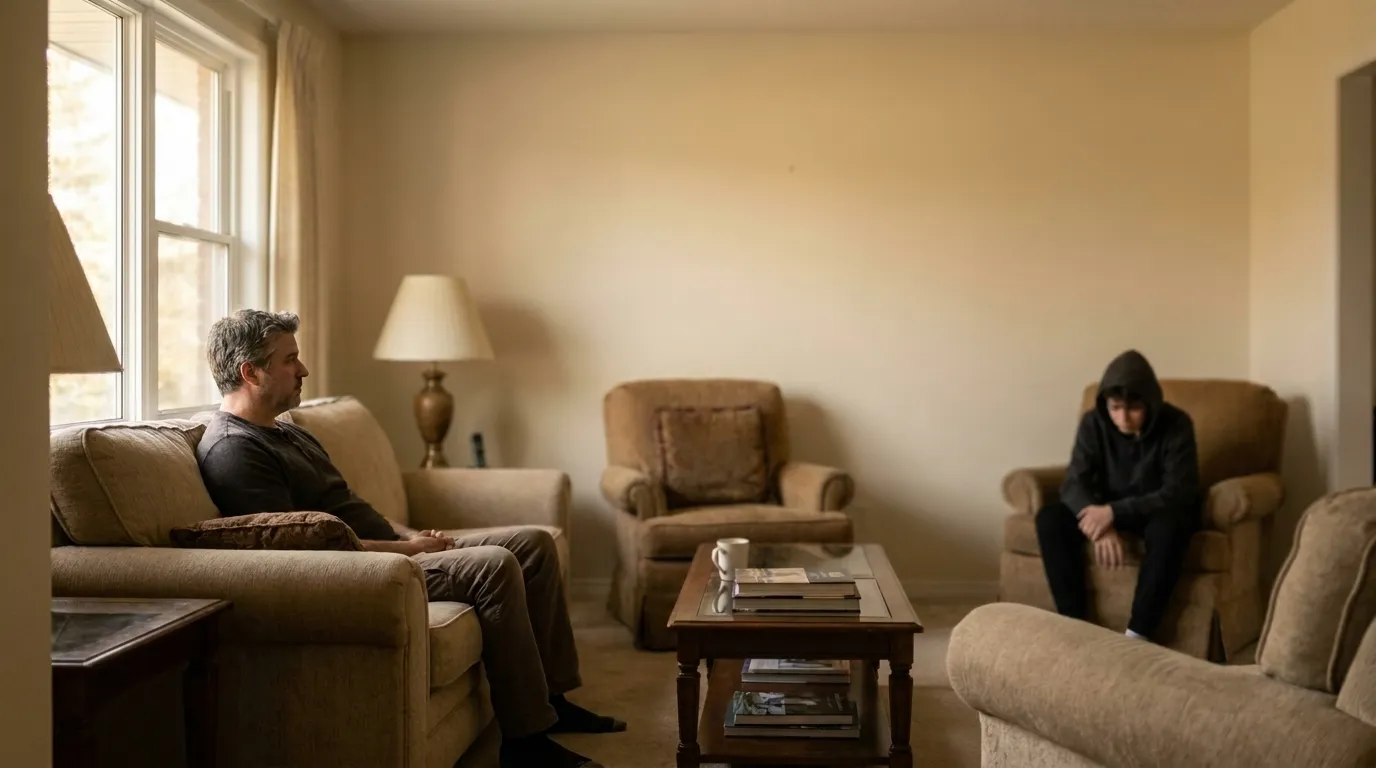
Man and teenage boy sitting apart on couches in living room, both looking thoughtful and distant.

DBT was developed in the late 1980s by Dr. Marsha Linehan, originally for adults with chronic suicidal behavior and patterns of self-harm. She found that traditional therapy approaches that focused only on insight or only on behavior change weren’t working for her patients. What was needed was a both/and approach, accepting the person’s experience as valid while also building skills to change unhelpful patterns. That tension between acceptance and change is the "dialectic" in Dialectical Behavior Therapy.

In the years that followed, the model was adapted for adolescents and families by Drs. Jill Rathus and Alec Miller, building in family work and tailoring the skills to the developmental realities of teens. DBT is now one of the most rigorously studied therapies for self-harm and suicidal behavior in adolescents. Mehlum and colleagues’ 2014 randomized trial in the Journal of the American Academy of Child & Adolescent Psychiatry compared DBT for adolescents to enhanced usual care in 77 adolescents with repetitive self-harming behavior, DBT produced significantly greater reductions in self-harm. The 2018 CARES trial (McCauley et al., JAMA Psychiatry) compared DBT to individual/group supportive therapy in 173 adolescents and found significantly greater reductions in self-harm and suicide attempts at end of treatment with DBT.

DBT is built around four skills modules, mindfulness, distress tolerance, emotion regulation, and interpersonal effectiveness. At Idaho Youth Ranch, we use a DBT skills approach that is youth- and family-friendly. Programs typically combine individual sessions with a skills group, with family involvement built in. DBT can be a standalone treatment or used alongside other therapy, and treatment length is tailored to each young person’s situation and progress.

How It Works

DBT works by holding two truths at once: that the young person’s experience right now makes sense given their history, AND that the patterns of coping that have developed are causing harm and need to change. Therapy teaches specific skills, practiced in session, in group, and at home, to live in that tension productively.

For teens whose emotions arrive intensely, standard "let’s look at the thought behind the feeling" approaches often fall apart in the moment that matters most. The emotion is too big. The window for cognitive work is too small. By the time anyone could think through whether a thought is accurate, the situation has already escalated.

DBT addresses this by working at two levels at once.

On the acceptance side, DBT teaches mindfulness and validation, for the teen and for the parent. The teen learns to notice what they’re feeling without immediately fighting it. Parents learn to validate their teen’s emotional experience even when they disagree with the behavior. This isn’t soft permission; it’s the foundation that makes change possible.

On the change side, DBT teaches specific skills for moments of intense emotion: ways to bring distress down, ways to make sound decisions when emotions are pulling toward harmful action, ways to communicate effectively in relationships when the impulse is to lash out or withdraw.

These two sides, acceptance and change, work together. Pure acceptance without change leaves teens stuck. Pure change without acceptance feels invalidating and rarely sticks. DBT holds both.

Man and teenage boy sitting apart on couches in living room, both looking thoughtful and distant.

The DBT Skills Modules

DBT teaches skills in four modules, each addressing a different dimension of emotional and relational functioning. The skills build on each other, with mindfulness as the foundation.

Module 1: Mindfulness
The foundation of all other modules. Mindfulness skills teach your teen to observe what’s happening internally without being swept away by it, noticing thoughts, feelings, and urges as they arise without immediately acting on them. This is harder than it sounds; it’s a skill that gets built through specific practices, not a personality trait.
Module 2: Distress Tolerance
Skills for getting through moments of intense distress without making the situation worse. The goal isn’t to make the pain go away, it’s to survive the moment without acting on harmful impulses. Specific techniques include TIPP (temperature, intense exercise, paced breathing, paired muscle relaxation), distraction strategies, self-soothing through the senses, and "radical acceptance" of situations that can’t be immediately changed.
Module 3: Emotion Regulation
Skills for understanding emotions, reducing emotional vulnerability, and changing emotional responses when needed. Includes work on the biological basics that affect emotional reactivity, sleep, eating, exercise, substance use, and specific techniques for shifting emotional states. This is the module where the long arc of change happens.
Module 4: Interpersonal Effectiveness
Skills for navigating relationships when emotions run high: how to ask for what you need, how to say no without damaging relationships, how to maintain self-respect, and how to navigate conflict without escalation. Specific tools include DEAR MAN, GIVE, and FAST, acronyms that give teens concrete language for situations they often find overwhelming.
Young woman with red hair standing close to a brown horse, both facing the camera outdoors.

What Conditions Does DBT Help With?

DBT was specifically developed for situations involving intense emotion dysregulation and chronic crisis behaviors. It has the strongest adolescent evidence base of any therapy for self-harm and suicidal behavior, and it is also effective for emotion-driven anger, family conflict, and impulsive behavior patterns.

Parents often arrive at DBT after other approaches have not produced lasting change in a teen whose emotions arrive too intensely for standard therapy. DBT for teen self-harm focuses on building specific skills for the moments when urges are highest, alongside the validation and family work that addresses what’s underneath. DBT for teen emotional intensity helps young people who feel everything more strongly than seems manageable, and helps families respond in ways that don’t accidentally make things worse.

Not Typically Used For

DBT is not the first-line approach when significant unprocessed trauma is the central driver of symptoms without major emotion dysregulation, EMDR or TF-CBT are typically the better starting points there. DBT is also not the strongest fit for anxiety or depression presenting on their own, where CBT is usually more direct. For active psychosis, severe substance use affecting safety, or active medical instability, stabilization comes first.

Primary Conditions

Secondary Conditions

What Happens in Sessions?

A DBT skills approach typically combines individual therapy with a DBT skills group, with family involvement built into the work. The specific format and length of the program is tailored to each young person’s situation, DBT can be a standalone treatment or used alongside other therapy. Compared to most therapies, DBT involves more between-session practice and a multi-month commitment because skill-building takes time and repetition to stick.

First Session / Assessment

The first session is an extended conversation, often 60 to 90 minutes, that covers what’s been happening, what your family hopes will change, and what DBT will actually ask of everyone. The clinician explains how the skills approach is structured, including what individual sessions and skills group look like, and how family involvement will work for your specific situation. Many families need a session or two to think about whether they’re ready to commit. That’s appropriate; DBT isn’t meant to be entered casually.

Individual Therapy

Your teen meets regularly with their individual DBT clinician, typically weekly, 50–60 minutes. Sessions follow a clear hierarchy: anything that threatens life or safety comes first, then anything that interferes with therapy itself (missing sessions, not engaging), then quality-of-life issues like relationships, school, and work. This hierarchy keeps therapy focused on what matters most and prevents the work from drifting toward whatever happens to come up that week.

Skills Group

Skills group is a teaching-focused setting where your teen learns the DBT skills alongside other teens. The group is more like a class than a process group, with practice exercises, worksheets, and homework. Some teens find group easier than individual sessions because they’re not the sole focus; others find it harder. Either way, the skills group is where the actual skill-building happens. Group format and schedule at IYR can vary; intake will walk through what’s available.

Family Involvement

DBT works better when  families are part of the process. The specific form family involvement takes  at IYR varies based on the young person’s age, situation, and the program  structure, sometimes that’s family sessions, sometimes a family component to  skills work, sometimes parallel parent support. The clinician will be clear  about your role early on so you know what to expect.

Between-Session Practice

DBT involves substantial practice between sessions, more than CBT or EMDR. Your teen completes "diary cards" tracking emotions, urges, and skill use each day; works through skills worksheets; and tries new skills in real situations. This is one of the things that makes DBT effective; it’s also what makes it a real commitment.

Teenage boy with headphones talks and smiles while seated across from woman holding pen in a cozy room.
Young woman with red hair standing close to a brown horse, both facing the camera outdoors.

How Parents Are Involved

Family involvement is built into a DBT skills approach because the work is harder to sustain in isolation. The specific form involvement takes at IYR depends on the format your young person is in, sometimes that’s family sessions, sometimes a family component to skills work, sometimes parallel parent support. Either way, this is a real commitment, and one of the reasons DBT works.

How You Participate

In a typical DBT program at IYR, parents have a defined role, learning the same skills their teen is learning so the language is shared at home, and participating in family-focused work in whatever form the program offers. Parents are not in the room for individual therapy sessions, where teens have their own confidential space. The clinician will walk you through your specific role early on so you know what to expect. For young adults 18 and older, parent involvement is at the youth’s request and may be lighter.

What to Say to Your Teen

DBT-trained parents often shift the language they use at home. Some phrases that work well:

  • "That makes sense, AND I still need you to...", using "and" instead of "but," which is a core DBT validation move
  • "I can see this feels huge right now."
  • "What skill might help here?", neutral prompt, no pressure
  • "Want to do TIPP together?", joining your teen in using a skill rather than directing them to use it
  • "I’m proud of you for noticing that urge and not acting on it."

What Not to Do

Common missteps DBT parents work to avoid:

  • Using validation as a manipulation tactic. ("I validated you, now you have to do what I want.") Validation has to be real.
  • Invalidating your teen’s emotions and then asking them to use skills. The skills don’t work in an invalidating environment.
  • Demanding skill use from your teen that you don’t practice yourself. Teens notice.
  • Reverting to old patterns under stress. This will happen; DBT teaches you to repair afterward rather than to be perfect.

How to Support Progress at Home

The most useful things often happen in the small moments, using a skill yourself when frustrated, validating before correcting, choosing the middle path between rigid control and total permissiveness. Practice the skills you’re learning even when your teen isn’t watching. Trust the structure of the program: showing up consistently, doing the practice work between sessions, staying engaged across the months it takes to build skill durability. DBT works when the whole structure is engaged, not when you cherry-pick the parts that feel comfortable.

Benefits and Outcomes

DBT has been shown to reduce self-harm and suicidal behavior in adolescents, with effects supported by multiple randomized controlled trials. Most teens who complete DBT also experience improvements in emotion regulation, family relationships, and overall functioning.

The adolescent evidence base for DBT is strongest in two areas: self-harm and suicidal behavior. The 2014 Mehlum trial showed DBT-A produced significantly greater reductions in self-harm than enhanced usual care among adolescents with repetitive self-harming behavior, with effects maintained at one-year follow-up. The 2018 CARES trial (McCauley et al.) compared DBT to individual/group supportive therapy in 173 adolescents and found DBT produced significantly greater reductions in self-harm and suicide attempts at end of treatment, though the differences between groups narrowed at one-year follow-up. Both trials suggest DBT works during the acute period when intervention matters most.

For young people who complete DBT, clinicians most commonly observe:

  • Reduced self-harm urges and behaviors
  • Better tolerance of intense emotions without immediately acting on them
  • Fewer crisis escalations at home
  • More productive conflict in family relationships, disagreements still happen, but they don’t spiral
  • Improved ability to maintain school, work, and friendships through emotionally hard periods
  • Skills that continue to be useful long after treatment ends

DBT is less established for anxiety or depression presenting on their own without emotion dysregulation, for those, CBT typically produces stronger effects. We use DBT where its specific strengths align with what a young person needs.

Teenage boy with headphones talks and smiles while seated across from woman holding pen in a cozy room.
Young woman with red hair standing close to a brown horse, both facing the camera outdoors.

Risks, Limitations, and Safety

DBT is generally considered a safe, well-tolerated therapy. Most of its risks are about fit and commitment rather than harm from the treatment itself.

Common Temporary Effects

In the early stages of DBT, some youth and families experience:

  • Frustration with the structure or pace of the work
  • Heightened awareness of patterns at home before the skills to change them are fully built
  • Resistance to attending multiple weekly components
  • Family tension as new validation skills take time to feel natural
  • Exhaustion from the time commitment

These effects usually ease as the skills develop and the structure becomes familiar. Let the clinician know if they feel overwhelming or persistent, pacing can sometimes be adjusted, and the team can help families troubleshoot specific obstacles.

When This May Not Work

DBT isn’t the right fit in every situation. It typically isn’t effective when:

  • The family cannot commit to the multi-component time requirement (full DBT typically requires several hours per week across individual, skills group, and family group)
  • Your teen’s primary concern is unprocessed trauma or straightforward anxiety/depression without emotion dysregulation, other therapies are usually better matches
  • Your teen is in immediate crisis requiring emergency stabilization rather than a months-long outpatient commitment
  • Significant active substance use is interfering with engagement (some DBT programs include substance use; confirm with intake)

A good clinician will tell you honestly if DBT isn’t the right next step or right now.

When to Seek Immediate Help

If your child is in crisis right now

If your teen is thinking about suicide, hurting themselves, or you’re worried about their immediate safety, please reach out for help right away. You can call or text 988 anytime, the Suicide & Crisis Lifeline is free, confidential, and available 24/7. If there’s immediate danger, call 911 or go to your nearest emergency room.

If your child is already in care at Idaho Youth Ranch, you can also contact your clinician’s office during business hours, or call (208) 377-2613.

Clinical Disclaimer

This page is for educational purposes and does not constitute a clinical diagnosis or treatment recommendation. A licensed clinician at Idaho Youth Ranch can help determine whether this approach is right for your child.

What Your Teen May Feel After Sessions

DBT has multiple session types, and the after-effects vary by what your teen has just done. Individual therapy may stir up specific issues; skills group is more like a class and tends to be less emotionally heavy; family-focused sessions can bring up real family tension as new patterns surface.

Common Feelings After a Session

After a DBT session, you may notice your teen:

  • Is more aware of their own emotional patterns. Naming what’s happening can feel exposing before it feels useful.
  • Is using new language. Phrases from DBT, "wise mind," "TIPP," "radical acceptance," "validate", may show up in normal conversation.
  • Feels more equipped. Many teens leave skills group with something specific to try, and the practice itself can be steadying.
  • Is frustrated. Some DBT skills feel awkward or counterintuitive at first. Frustration is part of the learning curve.
  • Is tired. The combination of individual work, skills practice, and family involvement is real work and the cumulative effect can show up as fatigue, particularly in the early weeks.
  • Brings home content from family-focused sessions. If your family is participating in that part of the work, expect to keep talking about what came up, that’s the point.

When to Be Concerned

Reach out to your teen’s clinician if:

  • Your teen seems significantly worse for more than a week or two
  • They consistently refuse to attend sessions or group
  • They show signs of new disordered behaviors around eating, sleeping, or substances
  • They mention thoughts of hurting themselves or not wanting to be here

Between sessions, you can reach the clinician’s office during business hours. For immediate crisis support, call or text 988 anytime.

Sad teenage boy sits alone at cafeteria table with a sandwich, apple, and milk carton on tray.
Young woman with red hair standing close to a brown horse, both facing the camera outdoors.

How Progress Is Measured

DBT tracks progress more granularly than most therapies. Daily diary cards, a hierarchy of treatment targets, and weekly individual sessions create a clear picture of what’s shifting.

Clinical Progress Markers

Your teen’s DBT clinician tracks progress in several ways:

  • Diary cards. Your teen tracks emotions, urges (including any urges to self-harm), and skill use each day. Patterns over weeks and months show whether the skills are taking hold and whether high-risk behaviors are decreasing.
  • Treatment target hierarchy. Sessions consistently address life-threatening behaviors first, therapy-interfering behaviors second, and quality-of-life issues third. Progress shows up as the higher-priority targets decreasing in frequency or intensity.
  • Skill mastery. The clinician watches for whether your teen is using DBT skills spontaneously, not just when prompted in session.
  • Standardized inventories. Periodic measures of depression, anxiety, emotion regulation, and self-harm behaviors provide objective data alongside clinical observation.

Signs Parents May Notice at Home

Progress in DBT often shows up at home in specific ways:

  • Shorter recovery time after big emotions. The intensity may not change much; the return-to-baseline gets faster.
  • Fewer crisis-level escalations. Disagreements still happen, but they don’t spiral the same way.
  • Your teen using a skill name out loud, "I’m going to do TIPP," "I need to use my wise mind here"
  • Less self-harm or fewer urges (or earlier identification of urges before acting on them)
  • More productive conflict. Arguments produce some movement instead of going in circles.
  • Your own communication shifting, using validation language, holding a middle path, not escalating reflexively

Progress is rarely linear. Watch the trajectory across months, not weeks.

When Progress Feels Stuck

DBT has built-in mechanisms for getting unstuck. Therapist consultation teams (where clinicians review difficult cases together) and the structured target hierarchy both protect against the work drifting. If two or three consecutive sessions feel flat, raise it with the clinician, that’s information they will use.

How Long Does DBT Usually Take?

DBT is generally a multi-month commitment. Most DBT programs ask families to commit to at least six months, with the specific length tailored to each young person’s situation and progress. Some young people continue for longer; others step down to less intensive support earlier.

DBT takes longer than most other therapies for a reason: the skills take time to learn, longer to practice into reliability, and longest to integrate into real life under stress.

A typical DBT skills approach involves:

  • Regular individual therapy sessions
  • A DBT skills group
  • Family involvement in a form that fits the young person’s situation
  • Practice between sessions to build skill durability

Some young people benefit from a longer course of DBT, particularly those with complex co-occurring concerns or those who entered DBT during a high-acuity period. Others step down to less intensive maintenance earlier as gains consolidate.

Sessions are typically weekly during the active phase. As gains consolidate and crises become rarer, support may step down to less frequent contact before treatment ends.

Your teen’s clinician will discuss timeline expectations during the early sessions and review progress regularly.

Sad teenage boy sits alone at cafeteria table with a sandwich, apple, and milk carton on tray.

Compared with Other Therapies

Therapy isn’t one-size-fits-all. Here’s how DBT compares to a few other approaches we offer.

CBT DBT is built for intense emotion dysregulation, self-harm, and chronic crisis patterns; CBT focuses on anxiety, depression, and changing thought-behavior loops.
EMDR DBT addresses present-day emotional reactivity and behavior patterns; EMDR processes specific past traumatic memories.
TF-CBT DBT teaches skills for managing intense emotions across many situations; TF-CBT integrates trauma-specific narrative and exposure work alongside CBT principles.
Equine-Assisted DBT is structured and skill-focused with substantial group and family components; equine therapy is experiential and works through relationship with horses.

Young woman with red hair standing close to a brown horse, both facing the camera outdoors.

What to Ask Before Choosing DBT

DBT is one of the most demanding therapies in terms of time, family involvement, and consistency. The questions below help you and a clinician decide whether the commitment is right for your family right now.

  1. Is DBT the right fit for what my teen is going through, or might a less time-intensive therapy work as well?
  2. What does the DBT skills approach actually look like at your program, what does my teen attend each week, and what role do I play as a parent?
  3. What is the typical length of the program, and how is that decided for each young person?
  4. How much practice between sessions is expected, and what does that look like in real life?
  5. What training do the DBT clinicians have?
  6. How does DBT fit with any other treatment my teen is already receiving, therapy, medication, school support?
  7. What happens if my teen refuses to attend a session or group? How does the program handle that?
  8. How will we know if DBT is working? What signs should I watch for at home?

Frequently asked questions

Common questions

parents may have

Answers to some of the questions families often ask when trying to understand these challenges.

What’s the difference between TF-CBT and regular CBT?
Blue plus sign icon with rounded edges on a white background.

TF-CBT is specifically designed for young people who have experienced traumatic events. It includes trauma-specific components, a trauma narrative, integrated parent or caregiver work, safety planning, that regular CBT does not include.
Regular CBT is excellent for anxiety, depression, and school-related struggles, but it doesn’t address the specific patterns trauma creates, flashbacks, hypervigilance, trauma-related avoidance, complex feelings about what happened. TF-CBT incorporates the cognitive and behavioral techniques of CBT but builds them into a framework specifically for healing from trauma.

Should we choose TF-CBT or EMDR for my child?
Blue plus sign icon with rounded edges on a white background.

Both are evidence-based treatments for pediatric trauma with strong research support. TF-CBT is typically the better fit when caregiver involvement is central or when a structured, verbal approach feels right. EMDR may be the better fit when the young person resists verbal processing or when a more memory-focused approach is preferred.
TF-CBT is recommended as first-line for pediatric PTSD by NICE and supported by other major clinical guidelines. EMDR is also recommended by major guidelines as effective for pediatric PTSD. Both can also be combined with each other or used sequentially. The intake conversation is where we sort this out together, there isn’t a single right answer, just a best fit for your particular young person and family.

Will my child have to describe what happened in detail?
Blue plus sign icon with rounded edges on a white background.

TF-CBT includes a trauma narrative phase, where your young person gradually puts words, drawings, or developmentally appropriate language to what happened. This begins only after skill-building, and the clinician carefully controls the pace.
The narrative is built piece by piece across multiple sessions, not in a single intense conversation. The clinician carefully calibrates pace to what your young person can tolerate, and there’s no pressure to share more than they’re ready for. For younger youth, the narrative may take the form of drawings, storytelling, or workbook-style activities; for older teens, it more often involves writing or speaking. The point isn’t to relive what happened; it’s to gradually loosen the memory’s grip. Many young people find this phase difficult at first and gradually relieving as it progresses.

Do I have to be part of the therapy too?
Blue plus sign icon with rounded edges on a white background.

In TF-CBT, a safe, supportive caregiver is part of the work, that may be a parent, guardian, foster parent, kinship caregiver, adoptive parent, or another consistent adult. The caregiver attends their own parallel sessions on the same weekly schedule, learning the same skills and preparing for conjoint sessions later in treatment.
This integrated approach is one of the things that makes TF-CBT effective. If a primary caregiver can’t participate due to schedule or other constraints, the clinician can discuss alternatives, including whether another supportive adult might participate or whether a different therapy fits better. For young adults 18 and older, caregiver involvement is at the youth’s request and may be lighter or absent entirely.

My child is young. Is TF-CBT appropriate at their age?
Blue plus sign icon with rounded edges on a white background.

At Idaho Youth Ranch, TF-CBT is available for youth and young adults ages 9–24. TF-CBT itself is one of the few evidence-based trauma therapies with research support across childhood and adolescence, including with younger children in the published literature.
For tweens and younger teens (ages 9–14), TF-CBT often uses workbook-style activities, drawings, storytelling, and stronger caregiver involvement alongside the verbal work. The same eight PRACTICE components are present, but the form looks different than it does with older teens. If your child is under 9 and you’re looking for trauma-focused care, the intake team can help you think through options, some IYR services may serve younger children, and they can help you find appropriate care if not.

What if my child doesn’t remember the trauma clearly?
Blue plus sign icon with rounded edges on a white background.

TF-CBT doesn’t require complete or accurate memory of what happened. The narrative work focuses on what your young person remembers and how they’ve made sense of it, not on reconstructing every detail.
Children’s memories of trauma are often partial, and that’s expected. The narrative is built from what they do remember, and the clinician helps integrate that with how your young person feels and thinks about the experience now. Pressure to "remember more" is not part of the model.

What if the trauma is still happening or recent?
Blue plus sign icon with rounded edges on a white background.

TF-CBT works best when the young person has enough safety and stability to process what happened. If harm is ongoing or safety is uncertain, safety planning and protection come first, and we can help you think through what that looks like.
For very recent trauma, brief early interventions may be more appropriate than full TF-CBT until some stabilization has occurred. The intake conversation is where we sort this out, including whether outpatient TF-CBT is appropriate or whether a higher level of care should come first

What about traumatic grief, losing someone in a sudden or violent way?
Blue plus sign icon with rounded edges on a white background.

TF-CBT has been specifically adapted for traumatic grief, when grief is tangled with trauma reactions rather than being ordinary mourning. There is a version of the model called TF-CBT for Childhood Traumatic Grief that addresses this directly.
Traumatic grief is different from ordinary grief, it often involves intrusive thoughts about how the person died, avoidance of reminders, and difficulty grieving the relationship because the trauma symptoms are in the way. TF-CBT for traumatic grief addresses both the trauma component and the grief component, sequentially. The intake conversation can help determine whether your young person’s grief presentation fits this adaptation.

Does Idaho Youth Ranch accept Medicaid or insurance for TF-CBT?
Blue plus sign icon with rounded edges on a white background.

Yes. Idaho Youth Ranch accepts Medicaid and most private insurance plans for TF-CBT therapy.
Because TF-CBT includes youth sessions, caregiver sessions, and sometimes conjoint sessions, coverage details for each component can vary by plan. Our intake team can walk you through what to expect during your initial conversation. We don’t want cost to be the reason a family doesn’t get help, sliding-scale support is available in some circumstances, and no family is turned away from a first conversation about care.

What if TF-CBT doesn’t work for my young person?
Blue plus sign icon with rounded edges on a white background.

If TF-CBT isn’t producing the kind of progress we’d expect, our clinical team will discuss other approaches that may work better, including EMDR, a different therapy, or in some cases a higher level of care.
Idaho Youth Ranch offers multiple evidence-based therapies, and our clinicians work as a team. Sometimes a different trauma therapy is the right fit; sometimes a co-occurring concern needs to be addressed first; sometimes more time is needed; sometimes a different level of care altogether is what’s needed. Honest assessment of what’s working is built into how we work.

Research and Sources

This page reflects current clinical research and standard practice in dialectical behavior therapy with adolescents.

Mehlum, L., Tørmoen, A. J., Ramberg, M., Haga, E., Diep, L. M., Laberg, S., Larsson, B. S., Stanley, B. H., Miller, A. L., Sund, A. M., & Grøholt, B., "Dialectical Behavior Therapy for Adolescents With Repeated Suicidal and Self-Harming Behavior: A Randomized Trial" (Journal of the American Academy of Child & Adolescent Psychiatry, 2014; 53(10), 1082–1091). Landmark adolescent DBT RCT. Type: Peer-Reviewed.

Mehlum, L., et al., "Long-term Effectiveness of Dialectical Behavior Therapy Versus Enhanced Usual Care for Adolescents With Self-Harming and Suicidal Behavior" (Journal of the American Academy of Child & Adolescent Psychiatry, 2019; 58(10), 957–966). One-year follow-up of the Mehlum 2014 trial. Type: Peer-Reviewed.

McCauley, E., Berk, M. S., Asarnow, J. R., Adrian, M., Cohen, J., Korslund, K., Avina, C., Hughes, J., Harned, M., Gallop, R., & Linehan, M. M., "Efficacy of Dialectical Behavior Therapy for Adolescents at High Risk for Suicide: A Randomized Clinical Trial" (JAMA Psychiatry, 2018; 75(8), 777–785). The CARES trial. N=173. Type: Peer-Reviewed.

Rathus, J. H., & Miller, A. L., "DBT Skills Manual for Adolescents" (Guilford Press, 2014). Standard adolescent DBT clinical reference. Type: Textbook.

Linehan, M. M., "DBT Skills Training Manual, Second Edition" (Guilford Press, 2014). Standard adult DBT clinical reference. Type: Textbook.

Miller, A. L., Rathus, J. H., & Linehan, M. M., "Dialectical Behavior Therapy with Suicidal Adolescents" (Guilford Press, 2007). Foundational adolescent DBT text. Type: Textbook.

Young woman with red hair standing close to a brown horse, both facing the camera outdoors.

What Happens After You Reach Out?

What happens after you reach out?

When you submit the Get Help form or call Idaho Youth Ranch, an intake team member will follow up within 2 business days. That first conversation is exploratory, not a commitment to DBT. We’ll ask what’s been happening, talk through fit and safety, review insurance or Medicaid questions, and help determine whether DBT, another therapy approach, or a different level of care is the right next step. DBT is a significant commitment, so it’s especially important that the fit conversation come before any decision to start.

Idaho Youth Ranch offers DBT for teens and young adults in Idaho through outpatient counseling in Boise and Coeur d’Alene, and through residential care at our RCH&R campus.

Thinking DBT might help your teen?