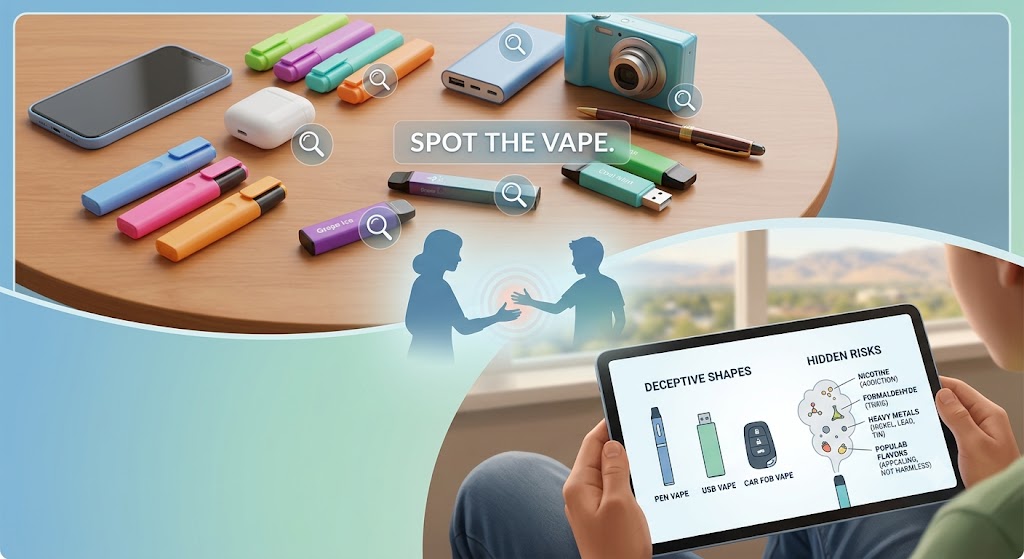
What's In a Vape
What modern vapes contain, and why teen vaping differs from smoking
In Idaho, teen vaping is also a legal issue: state law prohibits people under 21 from possessing, purchasing, or using tobacco products or electronic smoking devices. For most parents, though, the more immediate concern is usually health, dependence, secrecy, and what vaping may be helping a teen cope with.
If your teen is vaping, or you suspect they are, the most useful first step is to understand what modern teen vaping actually involves. The vaping landscape has changed substantially in the last five years, and most of what parents remember about e-cigarettes is no longer accurate. Here is what is actually going on.
What Modern Teen Vapes Actually Are
A vape is a battery-powered device that heats a liquid (called e-liquid, juice, or oil) into an inhalable aerosol. The liquid typically contains nicotine, THC (the active compound in cannabis), or both, dissolved in a base of propylene glycol and vegetable glycerin, plus flavorings. Modern teen vapes fall into four broad categories, described below. According to the 2024 National Youth Tobacco Survey, disposables now account for more than half of teen e-cigarette use, and Elf Bar alone is reported by more than a third of teens who currently vape.
Device recognition: what modern teen vapes look like
- Disposable vapes: Small flat rectangles or short cylinders, often colorful, often labeled with a flavor name. Single-use; thrown away when the battery dies or liquid runs out. The most common form of teen e-cigarette use. Brand names include Elf Bar, Breeze, Mr Fog.
- Pod systems: Rectangular devices that look like USB drives, sometimes about the size of a domino. Reusable with replaceable cartridges or pods. JUUL was the original; many brands now make them.
- Mods: Larger boxy or tube-shaped devices with adjustable settings. Less common among teens but still seen. Often associated with hobbyist adult vapers.
- THC cartridges (carts): Small glass or plastic tubes filled with oil that attach to a battery. Often look similar to nicotine pods. The oil inside is often thicker and more golden-colored. Can be hard to distinguish from nicotine devices without testing.
The Nicotine Math: Why This Is Not 2015 E-Cigarettes
A typical disposable vape sold in the United States contains 5% nicotine, which works out to 50 milligrams of nicotine per milliliter of liquid. A common device holds 10 to 13 milliliters of liquid, which means a single disposable can contain hundreds of milligrams of nicotine total. For comparison, a single cigarette contains roughly 10 to 12 milligrams of nicotine, of which only 1 to 2 milligrams is typically absorbed. Some disposable vapes can contain as much total nicotine as multiple packs of cigarettes, though the amount a teen absorbs depends on how often and how deeply they use the device. The form is different (vapor versus smoke), and the absorption is different, but the nicotine load is substantially higher than what teen smokers experienced in past decades. This concentration was not common five years ago. It is the single biggest reason teen vaping carries different risks today than it did when JUUL launched.
That does not mean every teen absorbs all of it, but it does mean the device can contain far more nicotine than parents expect. The amount that actually reaches a teen's bloodstream depends on device size, concentration, how often they use it, and how deeply they inhale.
The THC Vape Distinction Parents Often Miss
This is the part that surprises most parents. Vapes are device categories, not substance categories. The same kind of device that vaporizes nicotine can vaporize THC concentrate. From the outside, a nicotine vape and a THC vape can look nearly identical: same shape, same general size, same operation. THC vapes typically come as cartridges (oil-filled tubes) that attach to a battery, or as all-in-one disposables that look almost exactly like nicotine disposables. The THC concentrations in vape products are far higher than the THC content in cannabis flower, which means a single hit from a THC vape can produce significantly more intense effects than smoking traditional marijuana. According to the 2024 Monitoring the Future survey, the majority of teens who use cannabis now vape it rather than smoke it, and flavored THC vapes have become the most common form.
Do not assume a vape contains nicotine. Vape devices can contain nicotine, THC, or other substances, and they may look nearly identical from the outside. If you find a device, treat "I don't know what is in this" as part of the concern. The first move is not assumption; it is asking, or having the device evaluated if you cannot find out.
How to Recognize Teen Vaping
Recognition is harder than it was with smoking. Vapor dissipates within seconds, often without leaving a smell on clothes or in a room. The devices are designed to be discreet. That said, there are signs to watch for.
Physical signs: sweet or fruity smells lingering briefly in a room or on breath, increased thirst combined with dry mouth, unexplained nosebleeds or mouth sores, mild persistent cough, headaches, or irritability.
Behavioral signs are often more telling: frequent bathroom trips at school (vaping in bathrooms is common), stepping outside or to the garage repeatedly, secrecy with bags or pockets, USB-drive-shaped or highlighter-shaped objects you do not recognize, charging cables that do not match any device you own, small empty bottles or pods in the trash.
Mood-related signs of nicotine dependence include irritability when away from the device, difficulty concentrating, and using the device first thing in the morning or last thing at night.
None of these signs is conclusive on its own. Patterns matter more than single observations.
What Should I Do If I Think My Teen Is Vaping?
Once you recognize what you are seeing, the next step depends on what you are seeing. The guidance below covers the most common situations and where to start.
- You suspect vaping but have no proof: Start with an informational conversation, not an interrogation.
- You found a device: Work through the first 24 hours calmly — secure the device, do not assume what is in it, and plan the conversation before you have it.
- Your teen is using THC vapes, or vapes to cope with anxiety, sleep, or stress: A therapy assessment may help. Look for the emotional driver underneath.
- Your teen vapes daily, alone, first thing in the morning, or shows withdrawal symptoms when not using: Talk to your pediatrician about nicotine cessation support, and consider therapy alongside it if drivers are present. Medical support and therapy can work together.
- Your teen had a possible overdose, severe panic reaction to THC, or significant breathing or behavior change: Call 911 first. Call Poison Help at 1-800-222-1222 if there are no symptoms but the substance is unknown.
- Your teen refuses to talk or refuses help, and you do not know what to do: Parents can start without the teen's buy-in. Parent coaching or family therapy can help you change the pattern from your side while your teen decides whether they are ready.
Why Teen Vaping Is Different From the Teen Smoking Many Parents Remember
There are several reasons modern teen vaping carries different risks than the teen smoking of past decades. First, the nicotine load is dramatically higher, as covered above. Second, the adolescent brain is still developing through the mid-twenties, and the parts of the brain most involved in addiction (the reward and motivation circuits) are particularly susceptible to nicotine during these years. Adolescents who use nicotine regularly develop dependence faster than adults. Third, vapes are easier to use throughout the day than cigarettes ever were. There is no lighter, no smell, no obvious telltale signs. A teen can take hits between classes, in a bathroom, in a bedroom, in a car. The pattern of frequent low-volume exposure throughout the day produces a steadier nicotine level than smoking, which may make dependence develop more quickly. Fourth, the long-term respiratory effects of vaping are still being studied. The picture is incomplete, but emerging research suggests vaping is not the harm-free alternative it was marketed as. For most teens, the most immediate concern is dependence and the link between vaping and anxiety, sleep problems, or self-medication.
What Quitting Actually Looks Like for Teens
Most parents underestimate how hard it is for a dependent teen to stop vaping. Nicotine withdrawal is real, and for a teen who has been using a high-concentration disposable for months, it can include irritability, anxiety, trouble sleeping, headaches, difficulty concentrating, and cravings that come in waves. The first three to five days are typically the hardest. The first three weeks are difficult. Most successful quits involve some combination of: a clear decision (often after the teen has tried and failed at moderation), removing the device from access, having a plan for the withdrawal week including someone to talk to, planning what to do when cravings hit, and treating the underlying driver if one exists. For teens who are using vaping to manage anxiety, stress, or sleep, quitting without addressing the driver tends not to stick. The behavior was filling a need, and the need does not disappear when the device does. Some teens benefit from nicotine cessation support that is medically appropriate for their age; ask your pediatrician what is available. Some teens benefit from therapy for the underlying driver. Many teens benefit from both.
When Vaping Is a Signal, Not Just Experimentation
Some teen vaping is experimentation: one or two times in a peer setting, no pattern, no escalation. That kind of use still merits a conversation, but it is not necessarily a crisis. Other vaping is a signal. Signs that vaping has moved from experimentation into something more concerning include: using alone rather than only in social contexts, using to manage emotional states (to calm down, sleep, fit in, numb out), using daily or near-daily, escalating from a few hits to a continuous habit, hiding the use carefully rather than admitting to occasional use, mood changes when not using, or vaping being part of a broader pattern of risky or secretive behavior. When vaping is a signal, the underlying driver is usually something like anxiety, depression, ADHD, trauma history, loneliness, peer pressure, or family stress. Treating only the vaping leaves the driver in place and often produces relapse. Treating the driver, with conversation craft and sometimes with therapy, addresses the root and tends to be more durable.
Many teens vape to cope with something — anxiety, sleep problems, social pressure, loneliness, stress, sadness, ADHD-related restlessness. The vaping is the visible behavior; what is happening underneath is often more important. If your teen is vaping, the conversation that matters most is not usually about the device. It is about what your teen is trying to manage.
If You Want to Start the Conversation
If you have read this page and you want to bring up vaping with your teen but you are not sure how to open, one line that tends to land is: "I have been learning that modern vapes are much stronger than the e-cigarettes I remember. I am not asking because I am trying to catch you. I want to understand what vaping looks like around you and whether it is something you are dealing with."
Sources: FDA / CDC National Youth Tobacco Survey (NYTS) 2024 — current e-cigarette use prevalence, frequent and daily use rates, brand mix, flavor data, and the disposable-versus-pod split among adolescents; CDC youth e-cigarette guidance and adolescent brain development — nicotine's effects on the developing adolescent brain and dependence speed; University of Michigan Monitoring the Future study, 2024 — adolescent cannabis vaping prevalence, the rise of flavored THC vapes, and the THC-vape-versus-flower comparison; Idaho Code § 39-5703 (Prevention of Minors' Access to Tobacco Products and Electronic Smoking Devices Act) — Idaho's minor possession/purchase/use law.